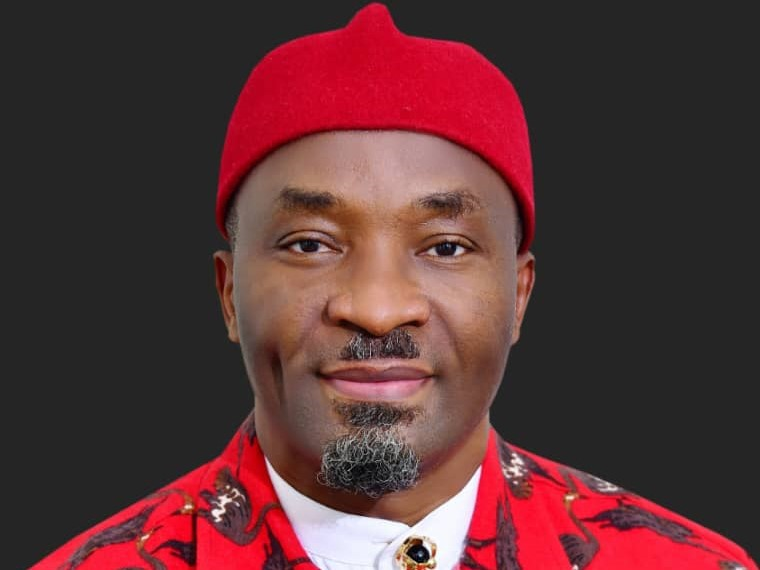
As Abia State inches toward the 2027 general elections, one contest is already generating more heat than most: the battle for Bende Federal Constituency. On one side stands Rt. Hon. Benjamin Okezie Kalu, Deputy Speaker of the House of Representatives, seeking a third term. On the other, a field of aspirants led most vocally by Labour Party's Chima "Ofuji" Anyaso. But strip away the noise, and the contest is really a question of substance versus sentiment , and substance, on this occasion, has a name.
The Case for Continuity
Benjamin Kalu is not a newcomer asking Bende to take a chance on him. He is the sitting Deputy Speaker of Nigeria's House of Representatives, the sixth-highest ranking political office in the country, a position his constituency has never held before him. Since his first victory in 2019, Kalu has moved from being one voice among 360 lawmakers to occupying the presiding chair of the Green Chamber's committee of the whole and chairing the Constitution Review Committee, an assignment with over a hundred legislative instruments, bills and motions to his name.
Beyond Bende, Kalu has positioned himself as a South-East asset. His Peace in the South-East Project champions a non-kinetic approach to resolving insecurity across the region, an initiative that goes well beyond the ordinary remit of a federal lawmaker. He has pushed for South-East Development Commission legislation, championed local government autonomy in the constitution review process, and used his national platform to advocate for federal presence and investment in a region that has often felt shortchanged. For Bende specifically, he points to projects across the constituency's thirteen wards, sustained empowerment schemes, and a youth and education agenda anchored on expanding free education and introducing coding into the school curriculum.
This is why, in May 2026, representatives from all thirteen wards of Bende gathered to pass a vote of confidence in Kalu's re-election bid, with community leaders publicly commending his representation since 2019. It is also why he cleared the APC primary for a third term with relative ease, even as turbulence around the Abia governorship race swirled in the background.
Why Bende Wouldn't Bench Its Best
Chima Anyaso is entitled to his ambition, and no one begrudges him the right to contest. But ambition is not the same as readiness, and noise is not the same as capacity. Anyaso's campaign has leaned heavily on the language of "equity" and "it's our turn" — an appeal to zoning sentiment rather than a competing record of national impact. That is a legitimate local argument, but it is not, on its own, a case for replacing a Deputy Speaker with someone who has never held elective office at any level.
Football offers the clearest analogy. No serious manager benches a Lionel Messi in career form, delivering results, carrying the team's global standing to hand the shirt to an untested rookie simply because the rookie feels it is "his turn." Form, output and stature matter more than sentiment when the stakes are this high. Bende is not just picking a representative; it is deciding whether to keep a South-East voice at the very top table of the National Assembly, or trade that influence away at the first sign of a rival with a microphone and a grievance.
The "Agreement" That Never Was
In recent weeks, Anyaso's camp has shifted tone, from declarations of victory to talk of an alleged "agreement" or understanding with Kalu, hinting that the incumbent somehow owes him the seat this cycle. This claim deserves scrutiny, not applause. Where, precisely, was such an agreement reached? Who were the parties and witnesses to it? What exactly did it entail , a formal zoning pact, a party resolution, or merely a private wish dressed up as a covenant? None of this has been produced, documented or independently verified. Vague references to an "understanding" are not evidence; they are the language of a campaign preparing its supporters for defeat before a single vote is cast.
The irony is glaring. This is the same Chima Anyaso who contested against Benjamin Kalu in 2019 as the PDP flagbearer and lost decisively, polling under 32 percent to Kalu's near-52 percent, a margin of well over three thousand votes. If an "agreement" existed guaranteeing Anyaso the seat, one wonders why it was not honoured in 2019, or indeed in 2023, when he chose to stand down instead. A defeat by that margin, followed years later by talk of an unwritten pact, sounds less like a genuine claim and more like the defeatism of a candidate managing expectations in advance.
Bende Federal Constituency stands at familiar crossroads: sentiment versus substance, noise versus numbers, a rookie's turn versus a proven asset's continuation. Chima Anyaso may rant, rave, and now retreat into talk of phantom agreements, but the record speaks louder than the rhetoric. Benjamin Kalu has given Bende a Deputy Speaker, given Abia a seat at the highest legislative table, and given the South-East a champion beyond the boundaries of his own constituency. When the ballots are counted in 2027, Bende will very likely do what any team with a Messi on the pitch would do — stay the course, not for lack of alternatives, but because the best player on the field has not yet finished the match.
Ejezie Andrew writes from Umuahia