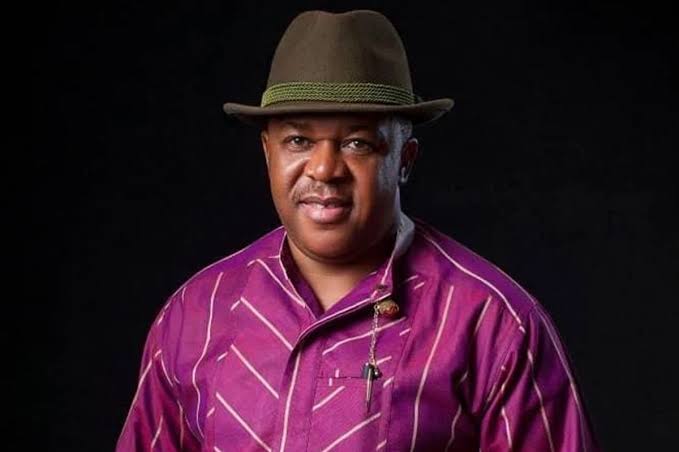


There are moments in public life when recognition simply catches up with reality. For Rt. Hon. Benjamin Kalu, Deputy Speaker of Nigeria's House of Representatives, that moment has arrived three times over. In 2026 alone, Kalu has been honoured with the Sun Legislative Icon Award, alongside dual recognitions from two of Nigeria's most respected media institutions, Daily Times and New Telegraph. Three separate newsrooms, three separate juries, one unmistakable verdict: this is a legislator whose work speaks for itself.
Accolades pouring in from home and within say as much in those congratulatory messages that read less like routine political praise and more like an honest reckoning with the record, each describing the honours as a fitting testament to what it called Kalu's "impeccable legislative performance" over the past year, and it is hard to argue otherwise. When three distinct media houses, working independently and answering to different editorial standards, arrive at the same conclusion about a lawmaker's impact, that is not coincidence. That is the consensus. And consensus of this kind is not handed out; it is earned, line by line, bill by bill, session by session.
What makes these awards particularly meaningful is what numerous groups and stakeholders pointed to as the substance behind them. They did not simply congratulate Kalu for occupying a high office, it credited him with genuine intellectual contribution to some of the most consequential debates now shaping Nigeria's future, chief among them the ongoing national push for state policing. This is not a minor legislative footnote. Decentralised policing sits at the very heart of Nigeria's security conversation, a reform many believe is essential to addressing the country's persistent challenges. To be recognised as a driving voice in that debate is to be recognised as someone shaping the country's direction, not merely participating in its politics.
The description of Kalu's approach as thoughtful, research-driven, and reflective of a legislator who understands the weight of the issues before the National Assembly deserves to be taken seriously. Nigerians have grown understandably weary of legislative theatre, of lawmakers who speak loudly but produce little. Kalu's record, as recognised by the Sun, Daily Times, and New Telegraph, points in the opposite direction: substance over spectacle, rigour over rhetoric. The group's further observation, that his consistency in championing people-oriented bills, motions, and projects has made him one of the most productive members of the 10th Assembly is the kind of claim that only holds up when it is backed by a visible trail of work, and by all indications, it is.
But perhaps the most compelling part of these tributes is not about legislation at all. It is about an example. They have held up Kalu as a model worth emulating, particularly for young people across the South-East and the country at large — and there is real weight to that framing. His journey from Bende to what the group described as the number six position in Nigeria's political hierarchy is not a story of privilege or shortcuts. It is a story of discipline, education, and sustained service converging into something tangible. For a generation of Igbo and Nigerian youth often told that hard work in public institutions goes unrewarded, Kalu's trajectory is a quiet but powerful rebuttal. He is proof, in some of these words, that hard work and integrity still count, a message that matters as much as any single piece of legislation he has championed.
There is also something to be said for what this triple recognition signals about public trust more broadly. At a time when many Nigerians approach their political class with justified skepticism, credible media houses independently choosing to honour a sitting Deputy Speaker sends a different kind of message , one of reinforced confidence in what representation can still look like when it is done with seriousness and intent. These awards have captured this well: continued recognition by credible institutions strengthens public confidence in the legislature itself, at a moment when Nigerians are watching their elected officials closely and asking for results, not promises.
As Kalu is set to receive these awards, the hope now is that Kalu remains steadfast, that these honours become not a resting point but a springboard for even greater legislative advocacy in the sessions ahead. That is the right instinct. Awards, however well-earned, are only ever a snapshot of work already done. The real test, and the real opportunity, lies in what comes next.
Three awards. One year. A single, consistent story of purposeful leadership. Bende gave Nigeria a legislator; Nigeria, through the Sun, Daily Times, and New Telegraph, has now given that legislator his due. The milestones are worth celebrating and, if the trajectory holds, they will not be the last.
Igboeli Arinzechukwu writes from Abuja