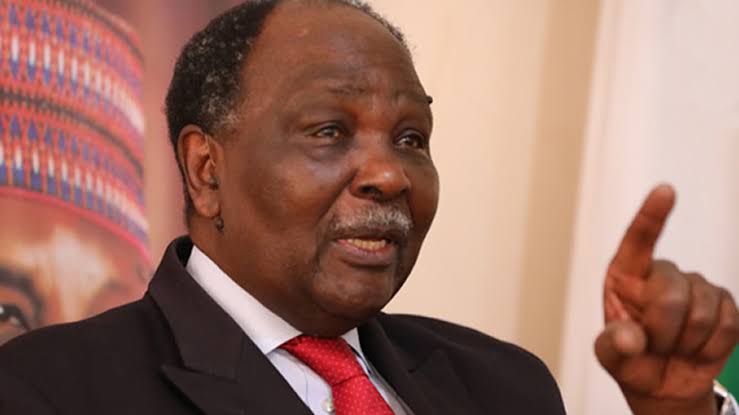
Former Head of State, Yakubu Gowon, has restated his account of Nigeria’s drift into civil war, accusing late Biafran leader Chukwuemeka Odumegwu Ojukwu of undermining repeated attempts at political settlement.
In his autobiography, *My Life of Service and Allegiance*, Gowon said efforts to prevent conflict were consistently frustrated during negotiations that followed the 1966 political crisis.
“Ojukwu deliberately and effectively thwarted every effort we made to amicably resolve our national issues,” he wrote.
Gowon said the Federal Military Government entered talks in good faith, especially during the 1967 discussions in Ghana under the mediation of then Ghanaian leader Joseph Arthur Ankrah.
The meeting, known as the Aburi Accord, was intended to prevent further deterioration of relations between the federal authorities and the Eastern Region.
“We went to Aburi with open minds and with the sincere hope of finding a basis for national reconciliation,” Gowon wrote.
However, he argued that the agreement collapsed due to conflicting interpretations after the delegation returned to Nigeria.
“What was presented by Ojukwu as the Aburi Accord was, in reality, his own interpretation of our discussions,” he stated.
He maintained that Ojukwu’s position would have weakened the federal structure and made national unity difficult to sustain.
Gowon said worsening mistrust, ethnic tension, and breakdown of communication between both sides further complicated efforts to reach a compromise.
He also defended the creation of new states before the declaration of Biafra, saying it was aimed at addressing minority fears and improving balance within the federation.
On the outbreak of war, he said the declaration of Biafra left the federal government with no option.
“Ojukwu’s declaration of Biafra left the federal government with no choice,” he wrote.
Gowon further insisted that the post-war policy of reconciliation was deliberate, adding: “We fought to keep Nigeria one, not to destroy a people.”
Ojukwu, who led the secessionist movement, had long maintained that the Eastern Region acted in response to insecurity and the collapse of trust within the Nigerian state.
Gowon, however, maintained that all diplomatic avenues were explored before military action began, insisting that the priority remained national unity.