

In our last few columns, we have examined leadership, representation and the qualities that make for effective public service. This week, our attention turns to an idea that has shaped the Igbo economic and social philosophy for generations—Aku Ruo Uno.
Among the Igbo, success is rarely seen as a private achievement. The expectation has always been that when fortune smiles on an individual, the benefits should extend beyond the immediate family. Wealth, in the Igbo worldview, acquires greater meaning when it finds expression in the lives of one's people and community.
This is the spirit behind Aku Ruo Uno —the belief that whatever success one attains should, in one form or another, find its way back home.
Traditionally, many successful Igbo men and women who built their careers outside their communities returned home to establish businesses, build industries and create employment opportunities. Others invested in schools, hospitals and community development projects. The underlying principle has always been the same: success is best celebrated when it uplifts others.
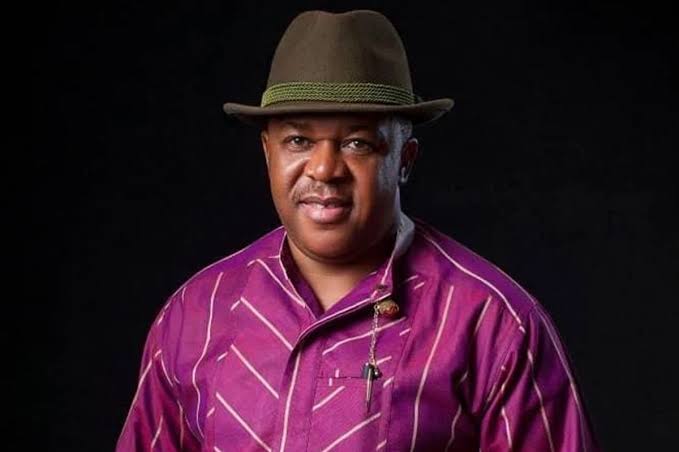
Engr. Eric Nnamdi Anyamene's story offers an interesting contemporary example of this philosophy.
After building a successful professional career in the United States, he answered the call to serve in Nigeria and went on to establish himself in public service and professional practice. Like many accomplished professionals, he could easily have confined his achievements to personal comfort and private pursuits. Instead, he chose a different path.
Rather than setting up a profit-driven venture back home, he established the Eric Nnamdi Anyamene Foundation (ENAF), with a deliberate focus on human capital development. His investment has been in people—young men and women whose dreams may otherwise have been limited by circumstance.
Through educational support, scholarships and community-based interventions, he has quietly demonstrated that Aku Ruo Uno is not only about building structures or opening businesses. Sometimes, bringing wealth home means investing in human beings and giving them opportunities to succeed.
The young student who earns a scholarship, the indigent child who remains in school, the beneficiary who discovers leadership potential and the communities that receive timely support are all products of this understanding of wealth and responsibility.
Perhaps what makes the Anyamene example noteworthy is that it is largely non-profit. There are no commercial interests to protect and no shareholders to satisfy. The returns on investment are measured in transformed lives and opportunities created for others.
In a society where philanthropy is often transactional or seasonal, his interventions present another way of understanding what it means to give back. They remind us that wealth does not always return home in concrete and steel. Sometimes, it returns home in the form of educated children, empowered youths and stronger communities.
Aku Ruo Uno remains one of the most enduring values of the Igbo people. Its essence is simple: wherever life takes us, our communities should be better because we passed through them.
For Engr. Eric Anyamene, bringing wealth home has not been about what he can build for himself. It has been about what he can build in others. And perhaps, that is one of the noblest expressions of Aku Ruo Uno.