Former Vice-President Atiku Abubakar has issued a pointed warning over what he described as ongoing attempts to undermine the African Democratic Congress (ADC), stating that any move by the presidency, the Independent National Electoral Commission (INEC), or the judiciary to interfere in the party’s affairs would be strongly resisted.
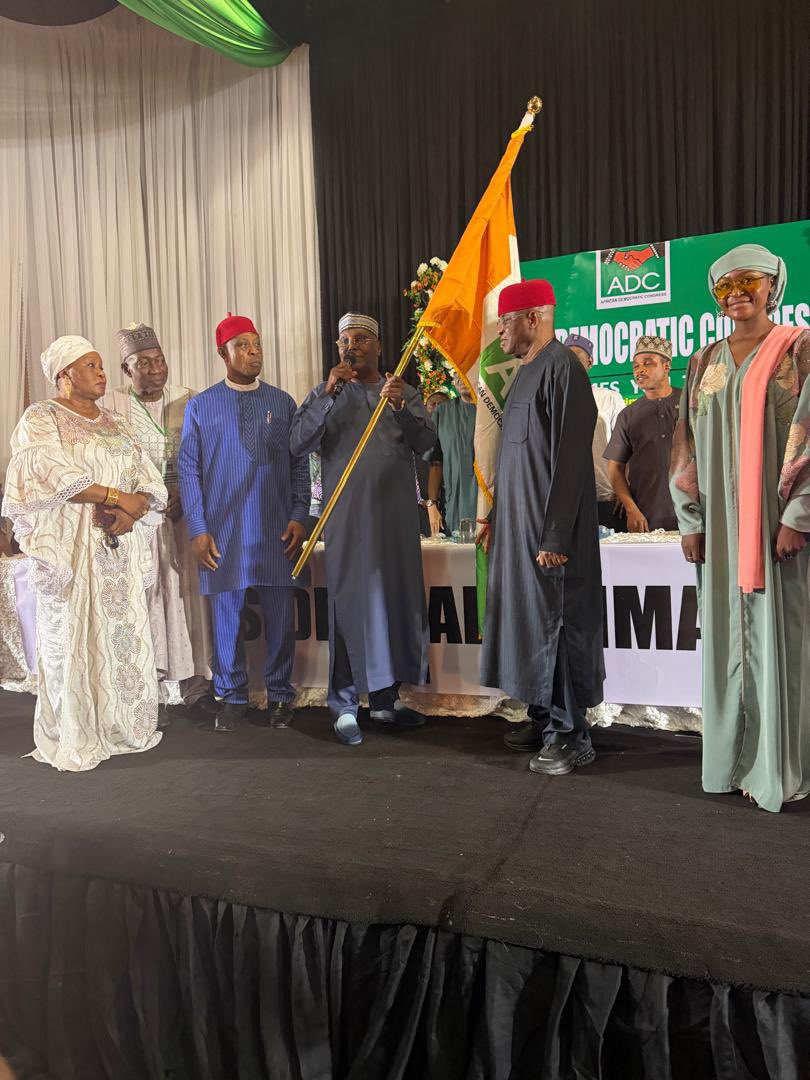
Atiku made the remarks on Wednesday shortly after he was announced winner of the ADC presidential primary election, in which he polled 1,846,370 votes to emerge as the party’s candidate for the 2027 general election.
The declaration of his victory capped a process that drew national attention, not only because of the scale of participation but also due to allegations of irregularities raised by some contestants. Among those who contested the outcome were Mohammed Hayatu-Deen and former Rivers State Governor Rotimi Amaechi, both of whom expressed concerns about the credibility of the exercise.
In his post-election remarks, Atiku congratulated fellow aspirants for participating in what he described as a necessary democratic process within the party. He said their involvement reflected concern about the direction of the country and commitment to political engagement at a time of national uncertainty.
He stated that internal competition should not be viewed as a weakness but as part of democratic development, stressing that political parties thrive when their internal processes are transparent and inclusive.
However, the former vice-president also used the occasion to raise concerns about what he called external interference in the affairs of the ADC. According to him, there were ongoing efforts aimed at weakening or delegitimising the party through institutional pressure.
He said:
“The government and INEC continue to undermine it, even trying to deregister it.”
He went further to caution that such actions would not be tolerated by party members or supporters if they persisted.
“Let me warn again that any further attempt to interfere in the affairs of the party by the presidency, INEC and judiciary will be fiercely resisted,” he said.
The remarks signal growing friction between opposition figures and key state institutions, particularly around issues of party autonomy, electoral oversight, and the boundaries of institutional authority in Nigeria’s democratic system.
Atiku also used his address to criticise the current state of governance in the country under President Bola Tinubu, arguing that Nigeria is facing serious challenges across multiple sectors. He pointed to worsening economic conditions, insecurity in several regions, and what he described as increasing political intolerance.
He said the concerns driving opposition activity are rooted in the lived realities of Nigerians rather than partisan rivalry. According to him, many political actors share a common worry about the trajectory of the country.
“I know that like me you are deeply concerned about the rapid descent of our country into economic disaster, catastrophic insecurity, extreme nepotism, political intolerance and the drive towards a one-party state by the current government and its party,” he said.
Atiku added that the primary election process itself should be seen as an opportunity to strengthen democratic practice within political parties, rather than a moment of division. He expressed appreciation to all participants for their engagement, describing the exercise as part of broader efforts to improve internal democracy in Nigerian politics.
Despite his victory, the atmosphere following the primary has remained tense, with allegations of irregularities surfacing from some of the contestants. Mohammed Hayatu-Deen and Rotimi Amaechi reportedly raised concerns about aspects of the voting process conducted nationwide, although detailed evidence supporting their claims has not been fully made public.
The ADC leadership has yet to issue a comprehensive response addressing both the allegations of irregularities and the wider concerns about interference raised by Atiku.
Political analysts say the situation highlights recurring tensions within opposition parties in Nigeria, where leadership contests often generate disputes over process and legitimacy. These tensions are expected to shape how the ADC positions itself ahead of the 2027 general election.
Atiku’s strong language is also likely to intensify debate over the role of institutions such as INEC and the judiciary in political party affairs. While these bodies are constitutionally mandated to regulate elections and ensure compliance with electoral laws, opposition figures have frequently accused them of overreach or bias.
As the political landscape continues to evolve, attention is expected to shift toward reconciliation efforts within the ADC and how the party plans to manage internal disagreements while preparing for a national election cycle that is already beginning to take shape.
For now, Atiku’s victory marks a significant moment for the party, but it also opens a new phase of political negotiation, both within the ADC and between opposition forces and state institutions.