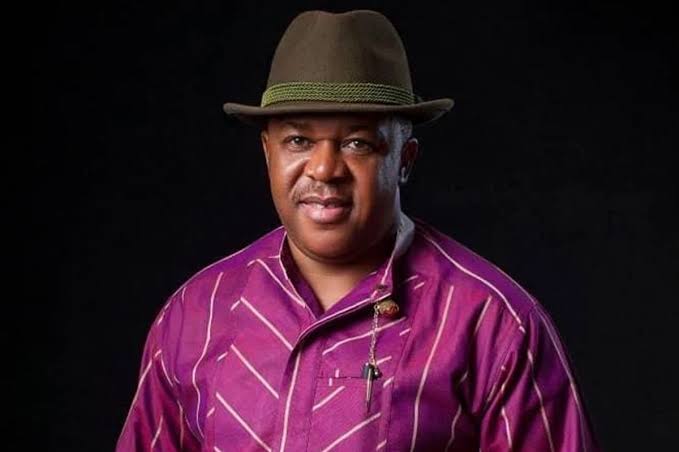

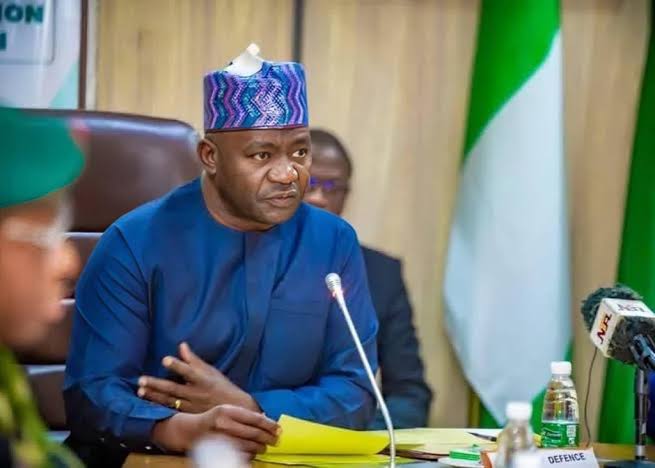
The Minister of Defence, Gen. Christopher Musa (retd.), has explained how Nigerian security forces rescue abducted victims without necessarily killing or arresting the terrorists holding them.
Musa said troops often rely on intelligence, tactical manoeuvres and the disruption of terrorists’ supply routes to secure the release of hostages without engaging in a direct confrontation.
The minister made this known on Thursday during an interview on Channels Television’s *Politics Today*, amid concerns over recent military operations in which troops rescued abducted victims without killing or arresting their captors.
Explaining the strategy, Musa said security forces first identify the location of the terrorists before blocking possible escape routes and cutting off their access to essential supplies such as food, water and fuel.
He said terrorists often abandon their captives and flee when they realise that security forces are closing in on their positions.
“Sometimes if you carry out manoeuvres, the funny thing is, the terrorists too don’t want to die. All this one they’re doing, carrying weapons, they don’t want to die.
“So once there’s anything, even if it’s a drone that comes, you see them scatter away and leave everybody. That’s what happens,” Musa said.
The minister said the military also seeks to prevent the flow of supplies to terrorist groups, arguing that their ability to sustain operations depends largely on access to basic necessities.
“So what we normally do is once we’re able to identify where they are, we block avenues for them. Like I said, take out the oxygen, they will die.
“Those are the aspects, and that’s why as long as people go to support to sneak in, give them fuel, give them water, give them food, all these are the things that are making them thrive. Once they don’t have that, they can’t survive,” he said.
Musa also disclosed that ransom payments could provide security agencies with intelligence for tracing criminal networks and the movement of illicit funds.
He said the Central Bank of Nigeria was working with relevant authorities to track money linked to criminal activities.
“I’m happy that the CBN too is living up to expectation, trying to make sure that even if we were able to trace monies that are coming in from those other areas, we can track back where they are,” he said.
Musa cautions governors over motorcycle distribution
The defence minister also appealed to state governors to review the distribution of motorcycles as palliatives and constituency projects, warning that some of the motorcycles could eventually end up in the hands of terrorists and bandits.
According to him, motorcycles provide criminals with mobility and make it easier for them to access remote communities and evade security forces.
“We try to appeal to even governors to stop giving motorcycles out as palliatives. Because these motorcycles are the same ones that still end up with these terrorists,” Musa said.
He advised that where motorcycles must be distributed, governors should consider smaller-capacity models that would be less useful to criminal groups.
“Even if you have to give, don’t give them the big-capacity motorcycles. Give them the small-capacity ones that they won’t be able to use to run around, because that gives them leverage. They can easily enter and then disappear,” he added.
Musa further alleged that motorcycles distributed through constituency projects and other government programmes could also find their way to bandit groups.