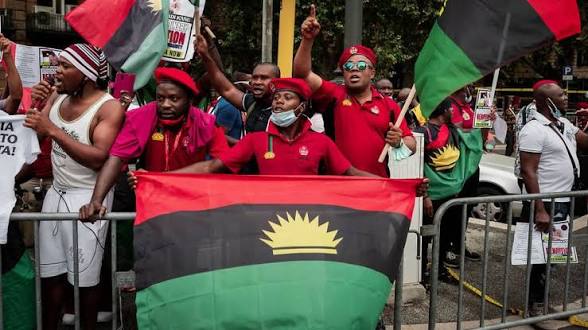
The Indigenous People of Biafra (IPOB) has directed residents of Nigeria’s South-East region and supporters in the diaspora to observe a one-day peaceful sit-at-home on May 30, 2026, in commemoration of what it describes as Biafra Heroes Remembrance Day.
The directive was contained in a statement issued on Friday, May 29, 2026, by the group’s spokesperson, Emma Powerful, who said the annual observance is dedicated to those who died during the Nigerian civil war.
IPOB said the sit-at-home is intended as a solemn period of reflection and remembrance for civilians and combatants who lost their lives during the conflict. The group described the event as more than a routine commemoration, framing it as a moral obligation tied to historical memory.
According to the statement, “This is not merely a date on a calendar. It is a sacred covenant between the living and the dead.”
The group said the remembrance day honours “millions of men, women, and children whose lives were lost during the Biafran struggle for survival,” adding that the impact of the war remains deeply embedded in the collective memory of affected communities.
IPOB maintained that the events of the civil war should not fade from public discourse, insisting that attempts to downplay or reinterpret the conflict amount to an erasure of lived experiences.
“There are those who would prefer that we forget,” the statement read. “There are those who wish that the mass suffering, starvation, bombardment, displacement, and deaths that occurred during the Biafran conflict should disappear from public memory.”
The group said the annual observance serves as a reminder of what it described as widespread humanitarian devastation during the war, including famine, displacement, and civilian casualties across communities in the South-East.
It added that remembrance of the dead also reinforces the belief that survival of the population carries historical and spiritual significance.
“As long as there remains a single child with Biafran blood flowing through his or her veins, the memory of our fallen heroes and heroines shall never perish,” Emma Powerful stated.
IPOB further described the civil war as “one of the most painful chapters in modern African history,” arguing that civilians bore the greatest burden during the conflict. It said communities experienced destruction across multiple fronts, including villages, markets, hospitals, and refugee camps.
“The world witnessed immense human suffering. The world saw starving children. The world saw entire communities devastated,” the statement added.
The group also said this year’s commemoration carries additional significance due to renewed public discussions about the war and ongoing debates around governance, accountability, and political structure in Nigeria.
It argued that unresolved historical questions continue to shape conversations about national unity and regional identity.
“Historical records, testimonies, and surviving documents continue to remind the world that the questions surrounding justice, accountability, and political restructuring remain part of the enduring conversation about Nigeria’s history,” the statement said.
IPOB stressed that the remembrance is not intended to be celebratory but reflective, urging residents to dedicate the day to mourning and contemplation.
“We remember the soldiers who stood when retreat seemed easier. We remember the scientists who created hope from scarcity. We remember the mothers who buried their children and continued to pray. We remember the civilians who perished in villages, towns, markets, churches, hospitals, and refugee camps,” the group stated.
In the same statement, IPOB called for full observance of the sit-at-home directive across the South-East region. It urged residents to remain indoors for the duration of the day and to suspend normal activities in honour of those it says were killed during the civil war.
“Let our towns be quiet. Let our roads be empty. Let our homes become places of reflection,” the statement read.
The group emphasized that the observance should not involve protests or public gatherings, but rather a quiet withdrawal from daily economic and social activity.
“This is not a day for celebration. It is a day for reflection. It is a day for mourning. It is a day for gratitude,” Emma Powerful added.
IPOB, acting on behalf of its detained leader, Mazi Nnamdi Kanu, reiterated its call for peaceful compliance, stating that the intention of the directive is to preserve memory and honour the dead.
The group concluded by reaffirming its position that remembrance of those who died during the civil war remains central to its identity and political message, stating: “A people who remember their dead can never truly be defeated. We remember. We honour. We shall never forget.”