
Parents of the 20 prospective National Youth Service Corps (NYSC) members abducted in Imo State have alleged that they paid millions of naira in ransom to secure their children’s release, despite the police insisting that the victims were rescued through sustained security operations.
Some parents said they paid ₦3 million, while others reportedly raised as much as ₦6 million after days of negotiations with the kidnappers, who initially demanded significantly higher amounts.
The victims were abducted on October 1, 2026, while travelling in two buses from Ibadan, Oyo State, to NYSC orientation camps in Abia and Akwa Ibom states. They regained their freedom on October 7 and arrived in Ibadan on Thursday.
One of the mothers said she struggled to raise ₦3 million to secure her child’s release, describing the period as emotionally distressing.
“I paid as much as ₦3 million as ransom while I was hoping that nothing happened to my child. I ran helter-skelter to raise the money. I eventually got the money and sent someone to deliver the ransom directly to them,” she said.
The father of another victim said relatives and other supporters gathered in Ibadan to raise ₦6 million for his son’s release.
According to him, some contributors converted the money into US dollars before it was sent to Imo State for delivery to the kidnappers.
“I am excited that my son is coming back. However, how do I repay the ₦6 million I borrowed? I’m just a farmer,” he said.
Another mother, speaking in an interview with News Central Television, said the kidnappers initially demanded ₦50 million per victim before reducing the amount following negotiations with the families.
She said the abductors later demanded ₦15 million but eventually insisted on ₦6 million after the parents explained that they could not afford the amount.
“We kept begging them that all we had was ₦5.5 million. They said no and insisted on ₦6 million. So, it’s that ₦6 million we paid,” she said.
The mother added that the kidnappers instructed the families to send representatives to a meeting point in Ibadan to arrange the payment.
She said her husband and her son’s elder brother attended the meeting, where they were instructed to transfer the money into an account and convert it into US dollars upon arrival in Imo State.
The prolonged captivity also affected her health, she said, adding that she experienced persistent diarrhoea and sleeplessness while her child remained in the kidnappers’ custody.
In a separate interview with BBC News Yoruba, another parent, who requested anonymity, also alleged that ransom was paid in US dollars to secure the victims’ freedom.
The parent said the families received financial assistance from friends and people online to raise the amounts demanded by the abductors.
“Not a single person was responsible for securing the release of our children. The parents, alongside friends and support from people online, contributed money so that each parent could pay the amount demanded by the kidnappers,” the parent said.
The source further claimed that the Department of State Services (DSS) was aware of the ransom arrangements and had invited parents to assist with investigations into the abduction.
According to the parent, the families converted the money into dollars through a local currency exchanger before delivering it to the kidnappers.
However, the ransom claims differ from the official account provided by the Nigeria Police Force, which said the victims were rescued following coordinated search-and-rescue operations.
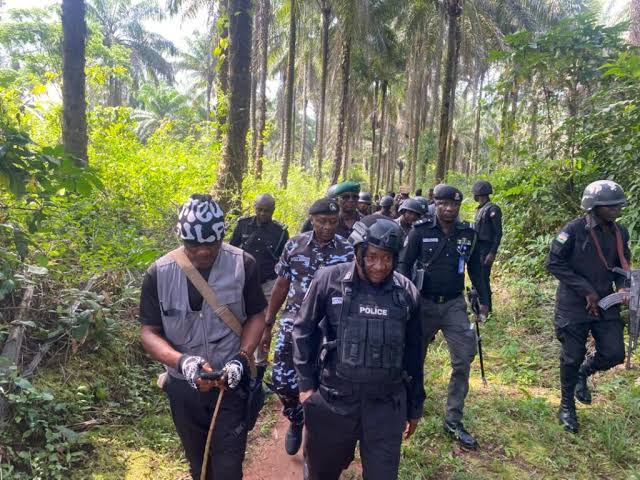
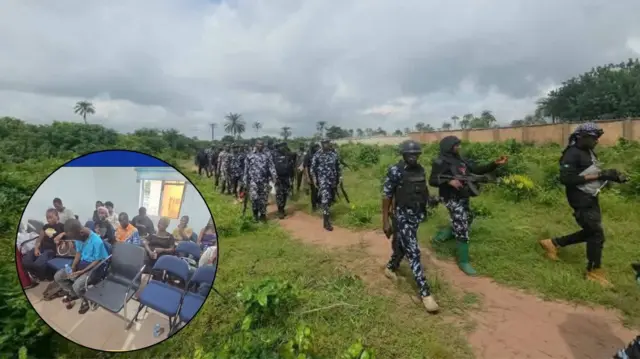
The Force Public Relations Officer, CSP Ani Iniedu, announced that the 20 prospective corps members were recovered on October 7 at Amakohia Ubi Village in Imo State.
Iniedu said the operation involved the police and other security agencies, adding that the victims were taken for medical assessment and necessary care after their release.
The police also said efforts were continuing to identify, arrest and prosecute those responsible for the abduction.
The Imo State Commissioner of Police, Audu Bosso, separately denied knowledge of any ransom payment made for the release of the 20 prospective corps members and another kidnap victim who was freed.
Speaking to Channels Television, Bosso maintained that security operatives forced the kidnappers to abandon their captives after sustained pressure and searches in the surrounding forests.
“The kidnappers eventually succumbed to pressure from security agencies, which combed the forest in a sustained rescue operation,” he said.
The conflicting accounts have left unanswered questions about the circumstances surrounding the victims’ release, as the parents maintain that ransom payments were central to the negotiations while the police credit security operations for their freedom.
The abduction occurred at Ogbaku in the Mbaitoli Local Government Area of Imo State, along the Owerri-Onitsha Expressway, as the prospective corps members travelled to their respective orientation camps in Bende, Abia State, and Uyo, Akwa Ibom State.
Following their release, the 20 victims arrived in Ibadan and were taken to the DSS office in the Aleshinloye area of Ibadan South-West Local Government Area for debriefing.
At the time of reporting, only representatives of the victims’ parents had been allowed into the DSS premises, while other relatives and sympathisers waited outside.
The incident has also raised concerns among parents about the safety of prospective corps members travelling to orientation camps and serving in unfamiliar locations.
One mother said she would not allow her child to continue the NYSC programme if the original posting remained unchanged. She said she would consider allowing the service year to continue only if her child were redeployed to a state she considered safer, such as Oyo or Ogun.
Meanwhile, the palace of the Olubadan of Ibadan issued a statement confirming that the 20 prospective corps members had regained their freedom.
As of the time of filing this report, the police had not publicly reconciled their account of the rescue operation with the parents’ allegations that millions of naira were paid to secure the victims’ release. The ransom claims had also not been independently verified.