

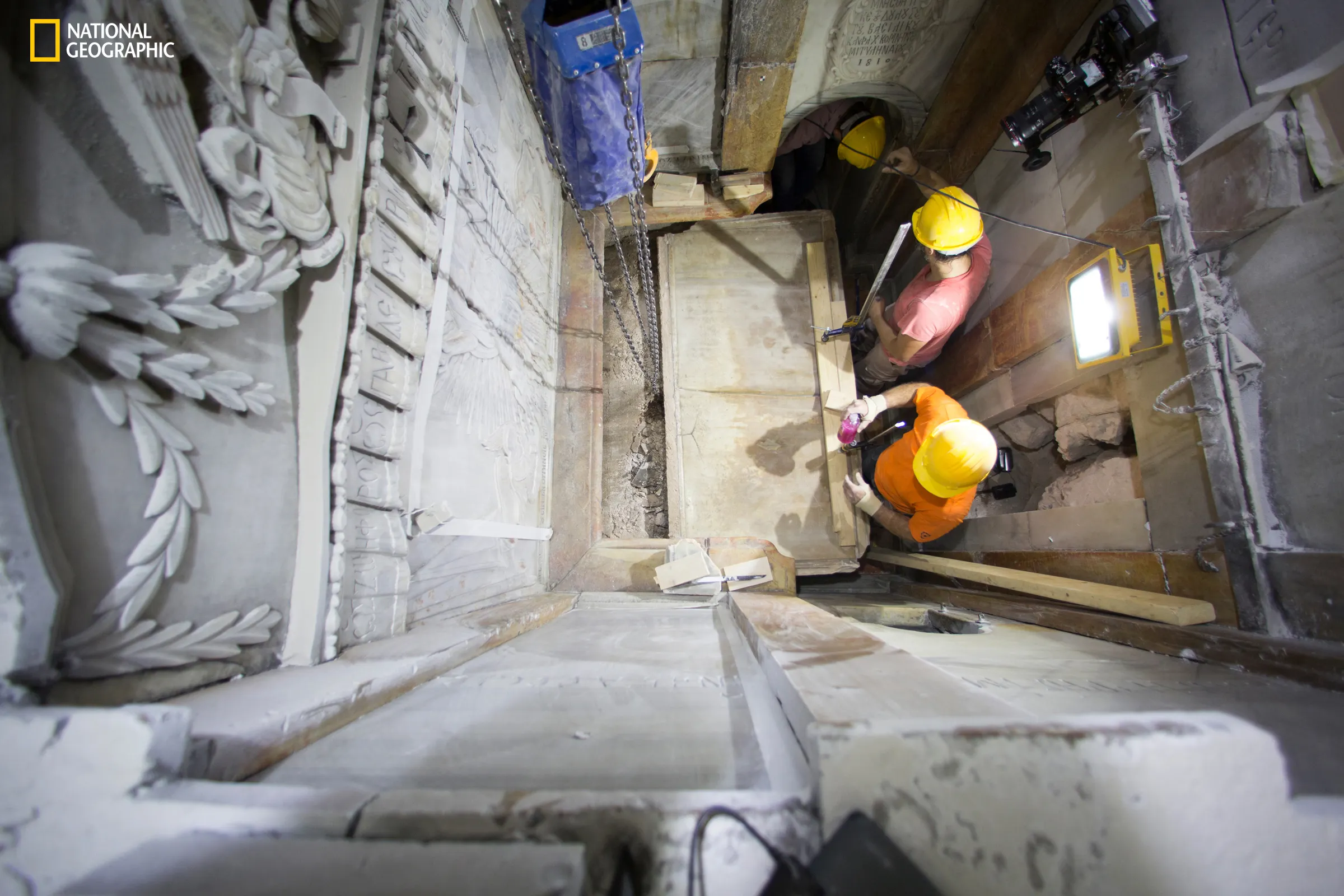
Archaeologists excavating beneath Jerusalem’s Church of the Holy Sepulchre say they have uncovered evidence of an ancient burial landscape that closely matches the biblical description of the place where Jesus Christ was buried.
The discovery was made by a team of Italian archaeologists working beneath the historic church in Jerusalem, with a preliminary study of the findings published in the archaeological journal *Liber Annuus*.
“We have found evidence of a funerary landscape,” Francesca Romana Stasolla, the lead archaeologist from the University of Rome La Sapienza, told the *Daily Mail*.
The findings have attracted attention because several features of the site appear to correspond with descriptions of Jesus’ burial in the New Testament.
The excavation was carried out beneath the Church of the Holy Sepulchre, a fourth-century Christian church built over a site that has been revered by Christians for centuries as the location of Jesus’ crucifixion, burial and resurrection.
The church is one of Christianity’s most important pilgrimage sites and attracts millions of visitors from around the world each year.
During the final stages of the excavation in 2025, researchers uncovered an ancient landscape consisting of an abandoned quarry, cultivated areas, rock-cut tombs and evidence of a garden.
Some sections of the quarry were around 20 feet deep and had been filled with soil, suggesting that the abandoned area was later used for agricultural purposes.
Archaeologists also identified evidence of olive trees and grapevines dating back to around the first century AD, offering clues about how the area may have looked during the period when Jesus is traditionally believed to have lived and died.
“The gospel mentions a green area between the Calvary and the tomb, and we identified these cultivated fields,” Stasolla told *The Times of Israel*.
The discovery has drawn particular interest because of its similarities to the Gospel accounts.
John 19:41 describes the area where Jesus was crucified as containing a garden and a new tomb where no one had previously been buried.
The archaeologists say their discovery of cultivated land and rock-cut tombs fits parts of that description.
The location also corresponds with geographical references in the New Testament. John places the crucifixion close to Jerusalem, while Hebrews 13:12 describes Jesus as suffering outside the city gate.
According to the researchers, the quarry was located outside Jerusalem’s city walls during the period associated with Jesus.
The rock-cut graves provide another significant link to the biblical accounts. The Gospels of Matthew, Mark and Luke describe Jesus’ tomb as having been carved out of rock.
Researchers also found evidence of a Roman structure that had blocked access to one of the burial chambers. The structure is believed to have been built during the reign of Emperor Hadrian in the second century.
About 200 years later, during the period when Emperor Constantine’s builders were developing the Church of the Holy Sepulchre, the Roman structure was demolished and the area was excavated. The tomb was subsequently separated from the surrounding burial chambers.
For the researchers, this sequence may indicate that knowledge of the site survived among early Christian communities, who continued to regard the location as significant.
However, the discovery does not conclusively prove that the tomb belonged to Jesus.
No human remains have been found that can be identified as those of Jesus, and the archaeological evidence alone cannot establish the identity of the person buried there.
Instead, the findings provide evidence that the area was a first-century burial landscape containing rock-cut tombs and cultivated land, while also showing how the site was later preserved and treated as an important Christian location.
Stasolla said the wider history of the site is significant because generations of Christians have regarded it as connected to Jesus.
“The real treasure we are revealing is the history of the people who made this site what it is by expressing their faith here,” she told *The Times of Israel*.
“Whether someone believes or not in the historicity of the Holy Sepulchre, the fact that generations of people did is objective.”
The latest excavation adds new archaeological evidence to the centuries-old debate over the Church of the Holy Sepulchre and the traditional location of Jesus’ burial.
While the discovery appears to strengthen the historical case for the setting described in the biblical accounts, archaeologists have stopped short of claiming that they have definitively found the actual tomb of Jesus Christ.