
The recent article by Comr. Kenechi Okoye on zoning in Idemili North and South Federal Constituency raises important conversations about fairness and representation. However, beyond the emotional arguments and distorted packaged narratives, it is necessary to examine the facts objectively.
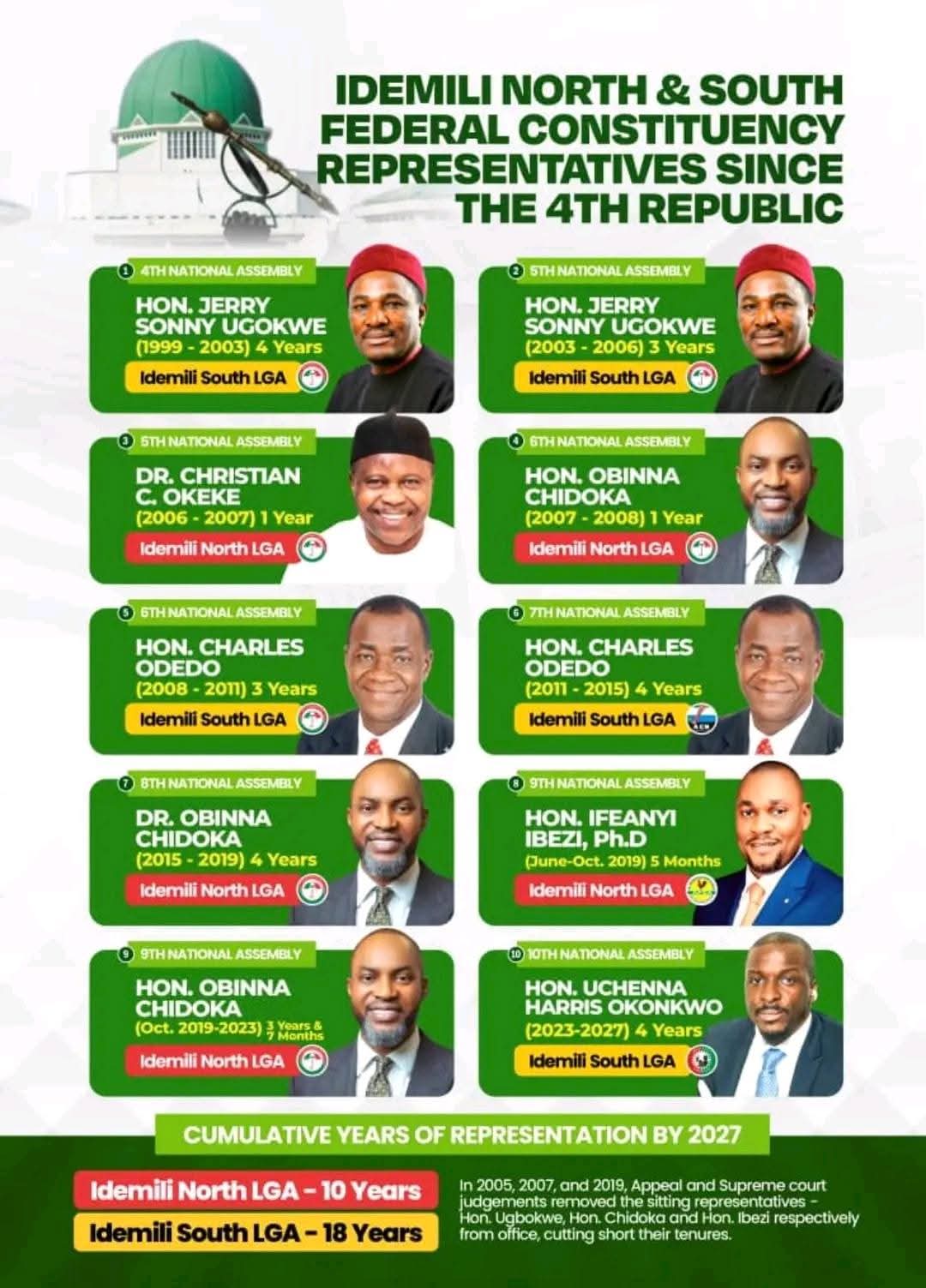
First, it is completely misleading to suggest that “fairness and equity” automatically mean power must remain in Idemili South in 2027. If we are truly going to talk about fairness, then we must also acknowledge that Idemili South has already enjoyed more years of representation than Idemili North over time. So the attempt to present zoning as though it exclusively favours one side is not only inaccurate but intellectually dishonest.
More importantly, democracy is not designed to protect poor performance. Political offices are not family inheritances or entitlement positions. They are mandates freely given by the people with the expectation that such mandates will be used for the collective good of society.
This is exactly why public office holders must understand that performance matters. When a representative performs well, he campaigns confidently on the strength of his achievements, his impact, and his connection with the people. He does not resort to emotional blackmail or hide behind selective interpretations of zoning arrangements to seek public sympathy.
What we are seeing now is a desperate attempt to use zoning as a shield against accountability. Unfortunately, that strategy is dead on arrival because the people can see through the deception.
The people of Idemili are wiser and politically more conscious today. They are asking serious questions:
What has changed?
What impact has been made?
How has representation improved the daily lives of ordinary people?
These are the issues shaping public opinion now—not overused political sentiments.
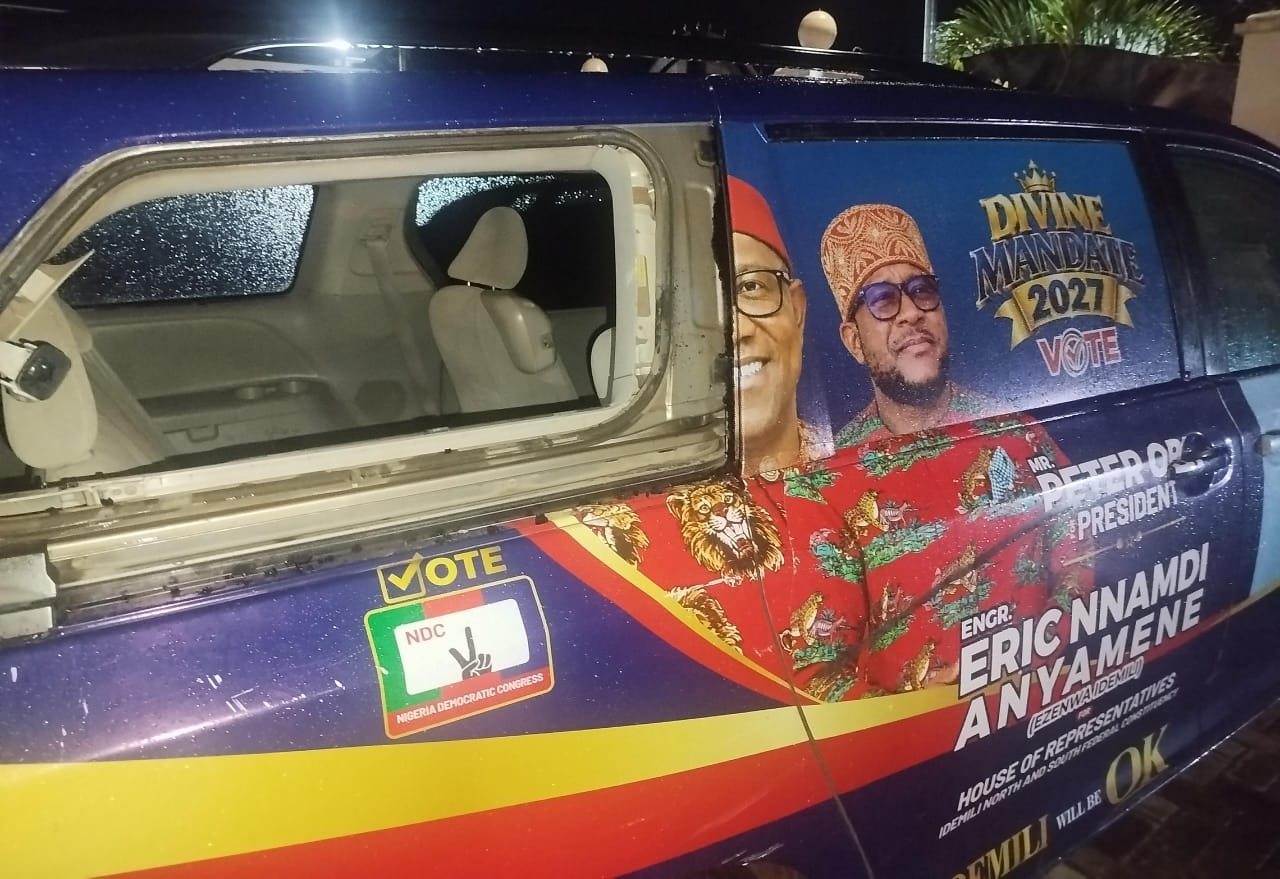
This is also why the growing support for Engr. Eric Nnamdi Anyamene across both Idemili North and South continues to unsettle some political interests. His acceptance is not built on propaganda, noise-making, or emotional manipulation. It is built on visible grassroots engagement, strategic thinking, accessibility, and genuine concern for the welfare of the people.
Long before the current political realignments became fashionable, Engr. Eric Anyamene showed foresight and political maturity in positioning himself strategically within the Nigeria Democratic Congress (NDC). While others were waiting to follow political trends and personalities, he had already read the situation clearly and established himself.
Beyond politics, his interventions speak loudly. Through different empowerment and support initiatives, he has consistently shown concern for students, youths, market women, vulnerable groups, and local communities. These are practical demonstrations of leadership—not mere slogans.
At the end of the day, zoning should never become a weapon to protect incompetence or discourage credible alternatives. If zoning must mean anything, then it should favour competence, capacity, vision, and effective representation—not underperformance.
Let this also serve as a message to present and future office holders: the people are becoming more aware, more informed, and more intentional with their votes. The era where politicians hide behind party structures or emotional appeals despite poor performance is gradually coming to an end.
Today, the people reward competence and punish failure with their votes.