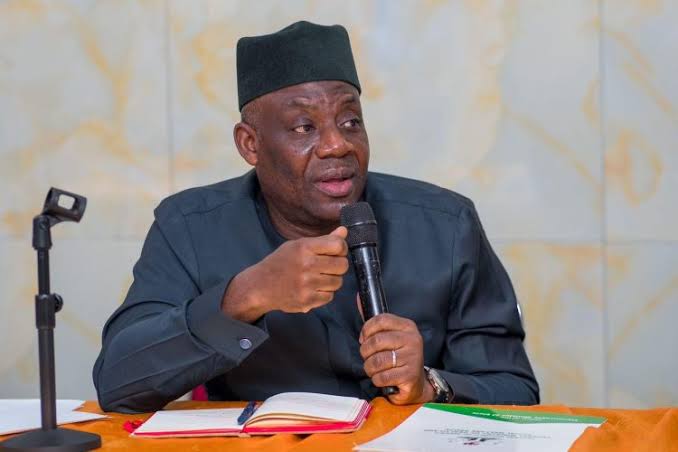
Minister of Education, Dr. Tunji Alausa, disclosed this on Tuesday in Abuja during the inauguration of the Universal Basic Education Commission (UBEC) Ministerial Implementation and Monitoring Committee.
According to the minister, the current structure, which treats junior and senior secondary schools as separate institutions under the 6-3-3-4 education system, has failed to achieve its objectives and has created significant barriers for pupils transitioning from primary to secondary education.
He said government data shows that Nigeria has about 80,000 public primary schools but only about 15,000 junior secondary schools, leaving many pupils without available spaces after completing primary education.
Alausa added that the separation of JSS and SSS has also resulted in overcrowded junior secondary schools while many senior secondary schools remain underutilised.
The minister said the transition gap has contributed to the country's growing out-of-school population. He noted that while about 24 million children enrol in primary school, only around four million complete senior secondary education, leaving more than 20 million children out of the system before finishing secondary school.
He cited experiences from Kaduna State and other northern states as evidence that the disarticulated structure has created unnecessary administrative layers without improving learning outcomes.
Nigeria's education system has operated under the 6-3-3-4 model for more than four decades, comprising six years of primary education, three years of junior secondary, three years of senior secondary and at least four years of tertiary education. Alausa said the system is now organised into three broad levels: Basic Education, Post-Basic (Senior Secondary) Education and Tertiary Education.
While acknowledging that governments over the years have not done enough to address the country's education challenges, the minister said reforms are needed to improve access and learning outcomes.
As part of the reforms, Alausa inaugurated a committee chaired by education expert Professor Rashid Aderinoye to accelerate the completion, handover and operation of UBEC-funded Smart Schools, Bilingual Schools and Alternative Schools across the country.
He expressed concern that despite substantial public investment, many of the projects remain abandoned or have not been transferred to state governments for use.
Speaking at the event, UBEC Executive Secretary Aisha Garba said the Federal Government has made progress in expanding access to quality basic education through the Smart Schools, Bilingual Schools and Alternative Schools initiative.
She said 37 Smart Schools have been established nationwide, with 24 already operational, while the remaining schools are at various stages of completion, furnishing and preparation for academic activities.