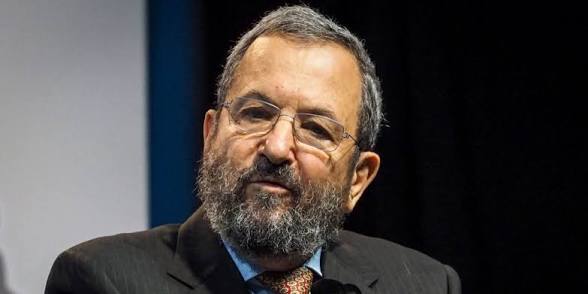
Former Israeli Prime Minister Ehud Barak has called on the Federal Government to establish a federal rapid response police force to support state police commands during major security emergencies.
Barak made the recommendation during an interview on **Arise Television** on Thursday, following Nigeria's adoption of a state policing framework.
According to him, state police can only succeed if they operate within a coordinated national security system that promotes transparency, information-sharing and cooperation with the Federal Government.
“The fact that there is a state police for every government doesn't mean that there is no coordination, correlation and dialogue with Abuja,” Barak said.
“The federal government should have access to information. There should be transparency about what happens in every state police.”
Barak said a centrally controlled rapid deployment police unit should be available to reinforce state commands whenever security threats exceed their operational capacity.
“There should be a central kind of rapid deployment police force under the command of Abuja that could be sent to support any state police when a problem beyond its capabilities emerges,” he said.
“State police should be able to call on the federal government to send this rapid deployment force during real emergencies.”
He added that the relationship between federal and state authorities should be based on continuous communication, with states reporting their operations while Abuja remains responsive to changing security needs across the country.
“There should be dialogue in both directions. The states should report, and the federal authorities should be sensitive to security needs that change over time or emerge in several regions simultaneously.”
Barak also warned against relying on the military for routine policing, arguing that soldiers are trained for combat rather than civilian law enforcement.
“The army's culture does not fit law enforcement. When soldiers are sent on missions that are typically police responsibilities, there can be unintended consequences and complications,” he said.
He, however, noted that military intervention remains necessary when armed groups seize territory and operate as organised insurgent forces.
Barak commended Nigeria's efforts to tackle terrorism, kidnapping, organised crime and separatist threats while maintaining democratic governance.
“We admire the way Nigeria is confronting terrorism, organised crime, kidnapping and separatist attempts while remaining committed to democracy,” he said.
On intelligence gathering, Barak said Nigeria appeared to be moving in the right direction but cautioned that building effective intelligence capabilities requires sustained investment over many years.
“It is a process. It doesn't come overnight. In Israel, it took decades to develop these capabilities,” he said.
Reflecting on Israel's security experience, Barak recalled leading several high-profile counterterrorism operations, including the rescue of passengers aboard the hijacked Sabena Flight at Ben Gurion Airport, during which current Israeli Prime Minister Benjamin Netanyahu, then a young officer, was wounded.
He also acknowledged that Israel continues to face significant security challenges despite decades of institutional development, stressing that no country achieves a perfect security system.
“We still have to learn from every event, analyse our mistakes and improve. It will be a long march for Nigeria, but every long journey begins with the first step,” Barak said.