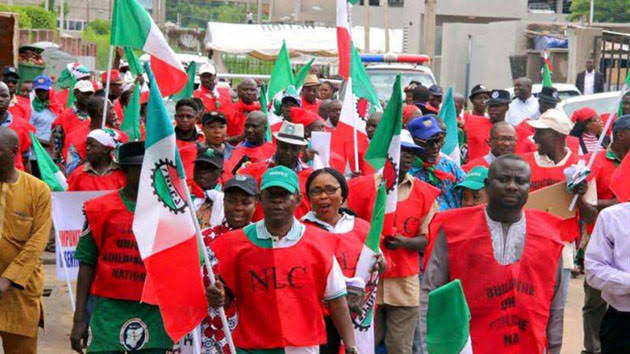
The Nigeria Labour Congress (NLC) has described a proposal to raise the national minimum wage from N70,000 to N100,000 as insufficient, arguing that workers require significantly higher earnings to cope with current economic realities.
The position follows a recommendation by Kwara State Governor AbdulRahman AbdulRazaq, who urged President Bola Tinubu to consider increasing the minimum wage to N100,000. AbdulRazaq made the proposal during a meeting between the President and state governors in Lagos on Friday.
Reacting to the proposal, NLC spokesperson Benson Upah said the labour union welcomed the governor’s intervention but maintained that the suggested amount does not reflect the rising cost of living.
According to Upah, factors such as the depreciation of the naira, persistent inflation, higher electricity tariffs, increased petrol prices, and the impact of recent tax policies have significantly reduced workers’ purchasing power.
“We consider it thoughtful of the Kwara State governor to propose this, but certainly, N100,000 falls far below the realistic figure,” Upah said in an interview with Punch.
He argued that a more appropriate minimum wage, based on prevailing economic conditions, would be N1 million.
Upah also pointed to government revenues, including allocations from the Federation Account Allocation Committee (FAAC), as evidence that higher wage payments should be achievable. He further noted that gains linked to developments in the Middle East had boosted government earnings.
Nigeria’s current minimum wage of N70,000 was approved by President Bola Tinubu in June 2024 after the signing of the National Minimum Wage Act. The law provides for a review of the wage structure every three years.
Before the 2024 adjustment, the national minimum wage stood at N30,000, a figure approved in 2019 during the administration of President Muhammadu Buhari.