
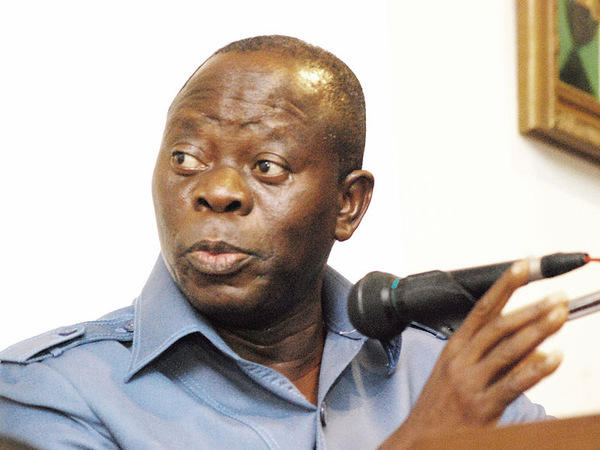
Senator Adams Oshiomhole has attributed Peter Obi’s victory over President Bola Tinubu in Lagos during the 2023 presidential election to the public backlash against the naira redesign policy introduced by former Central Bank of Nigeria (CBN) Governor Godwin Emefiele.
Speaking on Monday during an interview on TVC News' Beyond the Headline, the senator representing Edo North said the cash scarcity caused by the policy turned many voters against the ruling All Progressives Congress (APC).
Oshiomhole argued that the policy, introduced shortly before the election, created internal challenges for the APC and shaped the outcome of the presidential vote in Lagos.
“I have said this, but many people may not agree. Obi was produced by an unusual situation. When a ruling party decided to destroy itself as to make anybody running election on its platform unelectable, it is that confusion that brought those votes to Peter Obi,” he said.
He said the redesign of the naira under the administration of President Muhammadu Buhari left many Nigerians unable to access cash despite having money in their bank accounts.
According to Oshiomhole, long queues at ATMs, cash shortages and the growing reliance on Point-of-Sale (POS) operators fueled public frustration at a time when Nigerians were also dealing with fuel scarcity.
“People had money in the bank, but they couldn’t access it. They queued all night to withdraw ₦10,000, and after a week, even the ATMs were dry of cash,” he said.
The former Edo State governor said the hardship translated into protest votes against the APC in Lagos.
He recalled a remark that reflected the public mood at the time: “Why will you queue all night to withdraw ₦5,000, then queue for two nights to buy 10 litres of petrol, and expect people to queue again to vote for you?”
Oshiomhole maintained that the anger generated by the cash crunch contributed to Obi's victory over Tinubu in Lagos during the election.
The senator also defended the Senate's oversight powers, saying the 1999 Constitution empowers the National Assembly to summon individuals and institutions and investigate matters of public interest through its committees.