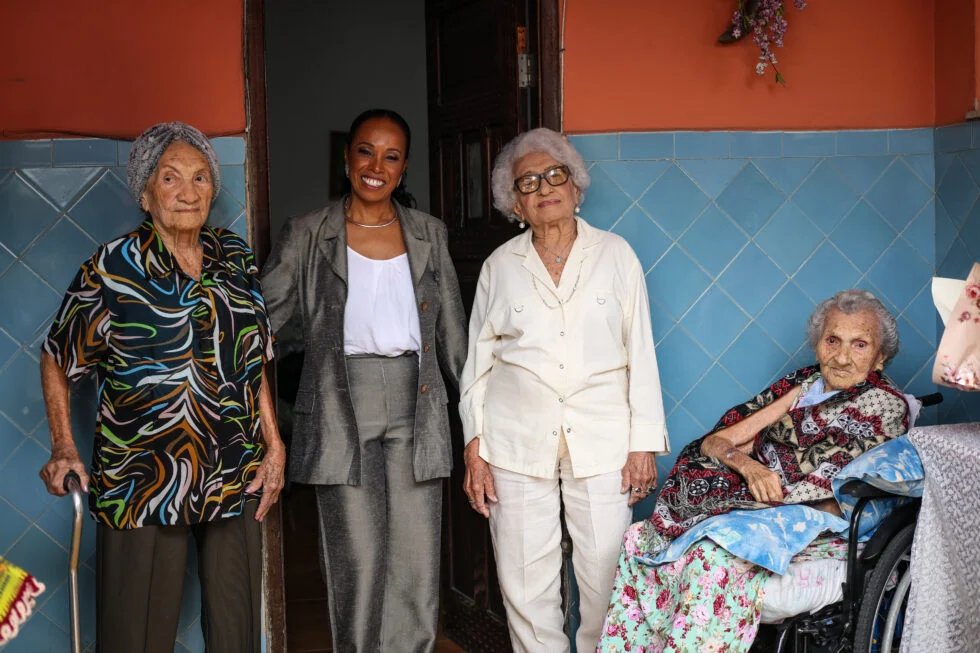
Three Brazilian sisters who hold the Guinness World Record for the highest combined age of three living siblings have become the focus of a major scientific study seeking to uncover the biological secrets of exceptional longevity.
Levita de Deus Nunes, 109, Zoraide de Deus Mota, 104, and Zulina de Deus Nunes, 103, have a combined age of 316 years. Their remarkable longevity, coupled with their good physical and mental health, has drawn the attention of researchers investigating why some people live well beyond 100 years.
According to LongeviQuest, the organisation that verifies longevity records in partnership with Guinness World Records, researcher Lara Souza recently visited the sisters at their home in Brazil as part of ongoing documentation of their lives.
The sisters were born in Cedro de São João, a rural town in the northeastern Brazilian state of Sergipe, where they grew up in a family of eight children. Their early years were marked by farm work, fresh homegrown food and swimming in rivers before they eventually moved to Rio de Janeiro.
Despite their record-breaking ages, the sisters lived largely ordinary lives centred on work and family.
Levita, the eldest, was born on June 7, 1917. She managed household responsibilities from an early age and later relocated to Rio de Janeiro to help her younger sister, Zulina, adjust to life in the city. Although she never married or had children, she devoted much of her life to caring for relatives. She also worked for 12 years at Rede Globo Television and enjoyed crochet, knitting and sewing.
Zoraide, born on November 24, 1921, qualified as a primary school teacher before training as a nurse. She built a long career in several hospitals in Rio de Janeiro after marrying Enéas Alves da Mota in 1950. The couple had five children.
The youngest sister, Zulina, was born on March 4, 1923. She married José Benvindo dos Santos in 1945 and raised six children. After her marriage ended, she moved to Rio de Janeiro in search of better opportunities and relied on the support of her sister, Zoraide, while rebuilding her life.
The sisters have now been enrolled in The DNA Longevo Project, a research initiative led by renowned geneticist Dr Mayana Zatz at the University of São Paulo. The study aims to identify genetic factors that help protect people from age-related diseases, physical decline and cognitive impairment.
Researchers are comparing the DNA of healthy centenarians and nonagenarians with those who experience frailty, chronic illnesses or cognitive decline earlier in life.
"We look for protective genes, and we know there are several of them," Zatz told Reuters. "The more people we have who live past 100, especially families with multiple centenarians, the more accurate our research will be in identifying them."
The project hopes to recruit 500 centenarians to strengthen its findings.
LongeviQuest Chief Executive Officer Ben Meyers said the sisters' case highlights both genetic and environmental influences on longevity.
"When sisters reach that age, there is clearly a strong genetic component, but because they live near each other, they also have a support network, with family able to help when needed. There is definitely a community aspect as well," he said.
When asked about the secret to their long lives, the sisters credited the healthy lifestyle they enjoyed while growing up.
Zulina recalled spending her childhood swimming and fishing in rivers while eating fresh food before refrigerators became common.
"Everything was fresh. We didn't have a refrigerator," she said.
Zoraide also stressed the importance of breastfeeding, while Levita reflected on her life with gratitude.
"I had a good childhood and adolescence. I can't complain," the 109-year-old said.