
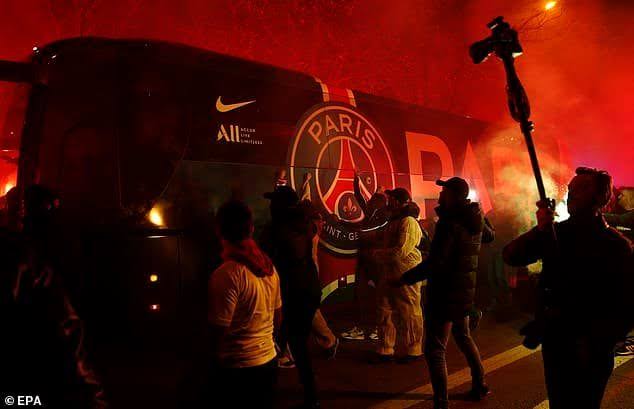
French authorities have confirmed the arrest of 416 people following disturbances linked to Paris Saint-Germain’s UEFA Champions League victory over Arsenal, as celebrations across the country escalated into confrontations with security forces and widespread property damage.
The incidents unfolded late Saturday and continued into the early hours of Sunday after PSG secured their first European crown in a penalty shootout win. What began as large-scale celebrations in Paris and other cities later shifted into unrest that required extensive police intervention.
Officials said 280 of the arrests took place in Paris alone, with the remainder recorded in other parts of France where crowds gathered to mark the club’s historic win.
Security forces were deployed in large numbers across the capital and surrounding areas. Authorities described the operation as a preventive measure aimed at managing mass gatherings that were expected after the final whistle. Despite the deployment, several areas experienced disorder that disrupted transport systems, including road traffic, bus operations, and sections of the rail network.
On the Champs-Élysées, thousands of supporters gathered shortly after the match ended. While many were celebrating peacefully, police reported outbreaks of violence, including the ignition of fireworks and flares, as well as incidents of vandalism. Videos circulating on social media showed electric motorcycles set on fire and damage to storefronts along major streets.
French police confirmed that six vehicles, two commercial premises, and a bus shelter were damaged during the disturbances. Officers also reported being targeted with projectiles in some locations, prompting the use of tear gas to disperse crowds in central Paris.
Earlier in the evening, confrontations were also reported near PSG’s Parc des Princes stadium, where fans had assembled to watch the match on large outdoor screens. According to officials, tensions escalated in pockets of the gathering as the result became clear and celebrations intensified.
Interior Minister Laurent Nuñez said seven police officers were injured during the unrest. He described the violence as “absolutely unacceptable,” noting that while most supporters celebrated responsibly, a minority were responsible for disorder that required a strong law enforcement response.
Authorities said the scale of the security deployment had been designed to prevent a repeat of previous incidents linked to major football victories. Nuñez said the strategy was built around what he described as a “very robust” security arrangement, though he acknowledged that some disturbances still occurred despite the precautions.
The unrest has drawn political reaction in France. Far-right leader Marine Le Pen criticized the violence, stating on social media that the events were unacceptable and that a football victory should not result in public disorder. Her comments reflected wider concerns among officials about recurring disturbances linked to large-scale sporting celebrations in the capital.
Transport authorities also reported disruption during the night, with sections of central Paris experiencing temporary shutdowns as police moved to regain control of affected areas. Cleanup operations began early Sunday as municipal teams assessed damage across multiple districts.
Despite the incidents, PSG’s victory remains a landmark moment for the club, marking their first Champions League title. The win triggered celebrations not only in Paris but also in several French cities where supporters gathered in large numbers.
Club officials confirmed that a victory parade is scheduled to take place in Paris on Sunday. The planned route includes celebrations around the Champ-de-Mars near the Eiffel Tower. A reception involving the players is also expected to be hosted by French President Emmanuel Macron.
Authorities have indicated that additional security measures will be in place for the parade, given the scale of attendance expected following the club’s historic achievement. Officials are aiming to ensure that celebrations proceed without further disruption.