

The race to power artificial intelligence is no longer just happening on Earth. In one of the most ambitious tech stories of 2026, Google and SpaceX are reportedly in active discussions to deploy AI data centers into orbit — a move that could fundamentally reshape how the world's most advanced computing infrastructure is built and powered.
If it succeeds, this partnership would mark the beginning of a new era: one where the servers running your AI tools float hundreds of miles above the planet.

What Is Google Actually Planning?
Google announced an internal initiative called Project Suncatcher in November 2025 — a research effort exploring whether large-scale machine-learning systems could operate in orbit. The project would place Google's Tensor Processing Units (TPUs) on solar-powered satellites linked by optical communications, creating what the company describes as a path toward machine-learning compute in space. AeroTime
Google is simultaneously engaging multiple launch providers and plans to deploy prototype satellites as early as 2027. SpaceX has emerged as a key potential partner, given its existing launch capabilities and relationship with Google — Google invested roughly $900 million into SpaceX back in 2015 and reportedly still holds about a 6.1% stake in the company. AI Insider
This isn't just a business deal between two familiar names. It is a signal that the infrastructure needs of AI have grown so large that even the entire Earth may not be enough to contain them.
Why Move Data Centers to Space?
This question might sound strange at first. After all, why go to the trouble and expense of launching servers into orbit when you can just build more facilities on the ground?
The answer is that building on the ground is becoming increasingly difficult.
AI training clusters now consume energy at levels that rival small cities. Meta, Amazon, Microsoft, and Alphabet have collectively signaled roughly $725 billion in capital expenditure for 2026 — almost entirely for data centers, custom chips, and GPUs — representing a 75% increase over last year. The appetite for computing power is growing faster than the planet's infrastructure can keep up. Tech Journal
Power grids in key regions such as Northern Virginia, the Nordics, and Singapore are already maxed out. Land is scarce. Water used for cooling is becoming a resource concern. Local communities are pushing back against the construction of massive industrial facilities in their neighborhoods. Tech Journal
Space, by contrast, solves several of these problems at once. Orbital data centers could tap into virtually unlimited solar power without any grid dependency, benefit from natural cooling in the vacuum of space without needing water, and sidestep the land use and zoning conflicts that slow down ground-based construction. There are no neighbors in orbit to complain. Tech Journal
Where Does SpaceX Fit In?
SpaceX brings two critical things to the table: rockets and ambition.
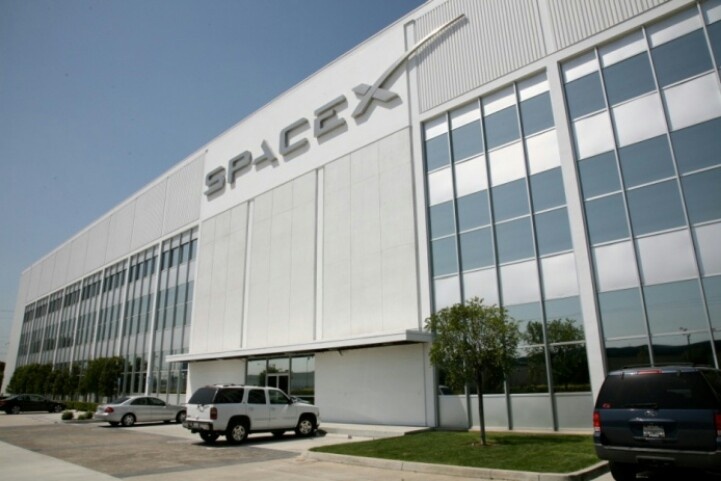
SpaceX's potential role appears to center on providing launch services, not operating Google's system directly. But the company's broader vision goes far beyond simply being a delivery vehicle. SpaceX has filed for authorization to launch up to one million satellites to support its orbital data center ambitions, suggesting that this is a long-term strategic priority, not just a side project. AeroTime
The talks coincide with SpaceX's anticipated $1.75 trillion IPO, in which Elon Musk has promoted orbital data centers as a potentially cheaper venue for AI compute in the coming years. Positioning SpaceX as the backbone of AI's next infrastructure layer would certainly make for a compelling pitch to investors. AI Insider
What Are the Challenges?
Not everyone is convinced the numbers work yet. Academic research published in April 2026 concluded that orbital data centers only become economically viable if launch and spacecraft construction costs fall dramatically below current levels. YourStory
Beyond cost, there are real technical hurdles. Concerns include satellite manufacturing complexity, radiation exposure damaging chips, communications latency, and the enormous challenge of moving data quickly between orbit and Earth-based networks. These are not small problems — they are engineering challenges that could take years or decades to fully solve. YourStory
Yet the fact that two of the world's most powerful tech companies are having this conversation at all is telling. It reflects just how serious the AI infrastructure crisis has become on Earth.
The Bigger Picture
The discussions underline how rapidly AI infrastructure is becoming a geopolitical and industrial-scale competition. Technology companies are now racing not only to build better models, but also to secure the energy systems, semiconductors, launch infrastructure, and physical capacity required to sustain AI growth over the next decade. YourStory
Orbital computing is still speculative. Prototype satellites are years away, and a full-scale space-based data center network is even further. But the direction is clear: as AI demand continues to surge, the companies that control the infrastructure powering it — wherever that infrastructure ends up — will hold enormous influence over the future of technology.
Google and SpaceX taking their first steps toward the stars might just be the most important tech story of 2026. And it is only beginning.
Stay updated with the latest tech news on Solakuti.com.