
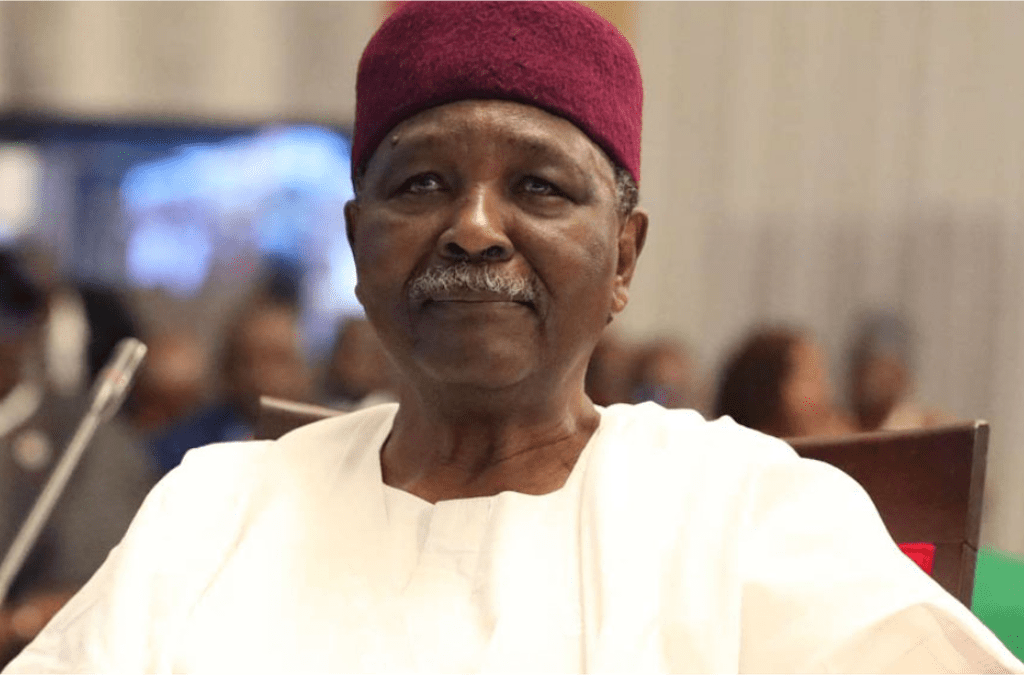
Former Head of State, Gen. Yakubu Gowon, has defended the Federal Government's post-Civil War financial policies, saying Igbos who lost property during the conflict were compensated and rejecting claims that the late Chief Obafemi Awolowo single-handedly imposed the controversial £20 payment.
In his memoir, *My Life of Duty and Allegiance*, Gowon said the decision on post-war currency control was taken collectively by the Federal Executive Council (FEC), not by Awolowo, who served as Federal Commissioner for Finance in his administration.
He said Nigerians who could prove they had money in Nigerian banks before the war were refunded in full, with accrued interest, while the £20 policy applied to holders of the defunct Biafran currency.
According to Gowon, the policy followed a nationwide currency change introduced after large-scale looting of the Central Bank in Benin and Enugu during the war.
He explained that the Biafran pound could not be exchanged at par with the Nigerian currency because it was not recognised as legal tender and doing so would have endangered the country's economy.
> "Due to the large number of Biafran pounds in circulation, the Federal Government decided it could not afford to exchange them all at par with the Nigerian currency without risking economic collapse," Gowon wrote.
He said economic advisers recommended a flat payment of about £20 to each adult returning from Biafra, irrespective of the amount of Biafran currency presented.
"We accepted the proposition and adopted it as policy," he said, adding that the government could not accurately determine the volume of Biafran notes in circulation.
Gowon maintained that those who fled during the war but retained evidence of deposits in Nigerian banks received the full value of their savings in Nigerian currency, including interest.
"All who fled Nigeria but had proof of having money in Nigerian banks received full value for their money plus the interest that it earned in the Nigerian currency," he wrote.
The former military leader also defended Awolowo against criticism over the policy.
He said: "Pseudo-historians continue to blame the Commissioner for Finance, Chief Awolowo, for the after-effect of the Federal Government's post-war currency control policy. This is far from the truth."
According to Gowon, the decision was taken by the government after considering the advice of economic experts.
"We certainly could not have ignored the recommendations of our economic advisers without collapsing the economy. Thus, the government made a collective and tough decision to save Nigeria's economy," he said.
Gowon further stated that his administration committed significant resources to rebuilding the former Eastern Region after the war through its policy of reconciliation, reconstruction and rehabilitation.
He said the Federal Executive Council allocated a substantial share of the national budget to the East Central State and other war-affected areas and also brought forward the implementation of the Second National Development Plan to enable the region participate fully in the country's recovery.