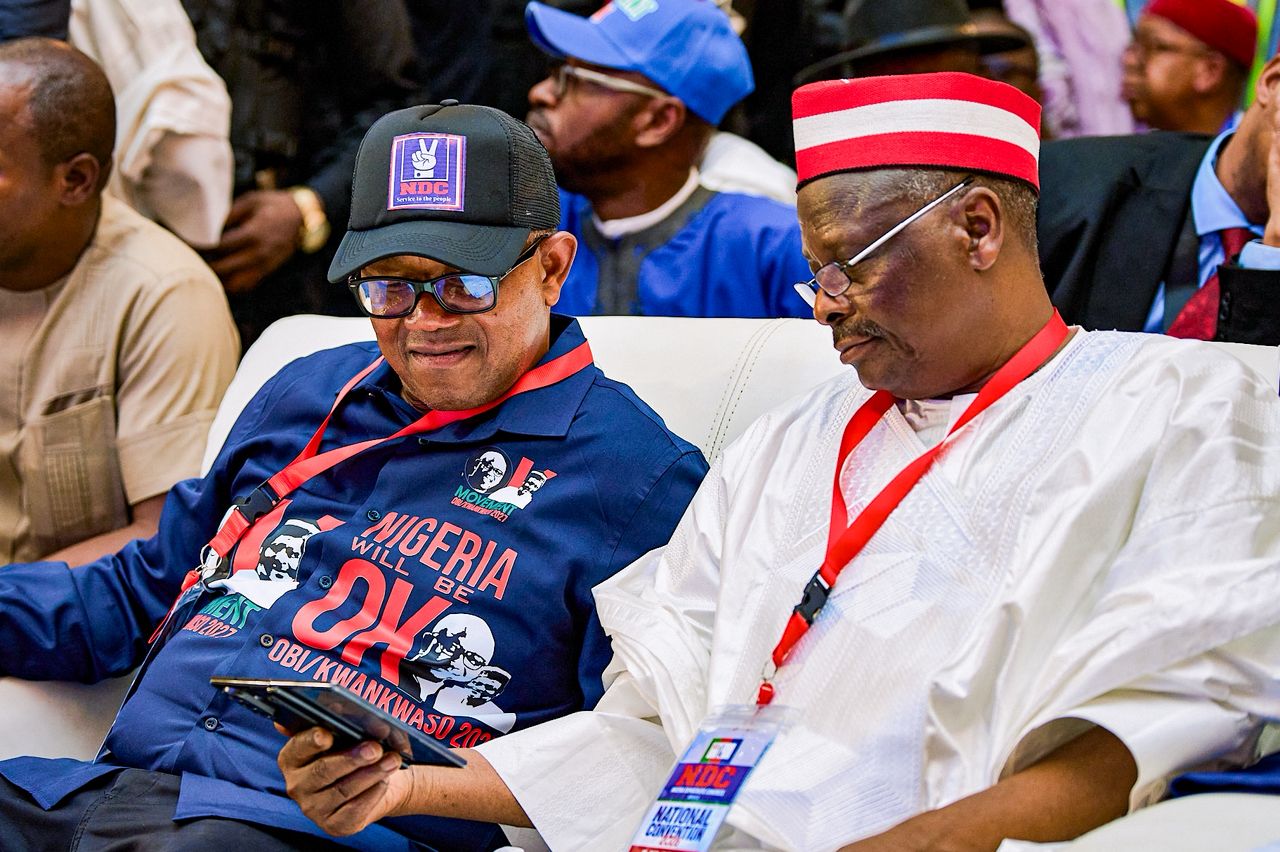
A leadership dispute has emerged within the OK Movement, a political support platform backing the joint presidential ticket of Peter Obi of the Nigeria Democratic Congress (NDC) and former Kano State Governor Rabiu Kwankwaso, exposing divisions over the group's leadership structure.
The crisis intensified after Jackie Wayas, who identified herself as the National Convener of the movement, announced the appointment of former Inter-Party Advisory Council (IPAC) Chairman Peter Ameh as the National Director-General. Wayas said the decision was approved unanimously by the movement's steering committee in recognition of Ameh's political experience.
The announcement was immediately challenged by members of the organisation, who questioned Wayas' authority to speak as the movement's national convener. Efforts to obtain clarification from her were unsuccessful.
Former National Publicity Secretary Justin Ijeh acknowledged that disagreements exist within the movement but urged members to resolve them privately. According to him, internal disputes are inevitable in political organisations, but public exchanges could weaken the movement's objective ahead of the 2027 elections.
Ijeh said he had stepped aside as spokesman until the dispute is resolved, citing competing claims to the office of Director-General.
However, the movement's current Director-General, John Ughulu, dismissed Ijeh's comments, insisting the former spokesman had been removed from office and no longer speaks for the organisation. He accused a rival faction of attempting to take control of the movement.
Ughulu said the OK Movement was created as a broad political platform to unite supporters of Obi and Kwankwaso while allowing members to retain their existing political affiliations. He added that the movement was designed to remain active beyond the 2027 election.
He also claimed Obi had appealed to him not to address the dispute publicly and defended separating the leadership of the OK Movement from that of the Obidient Movement to avoid overlapping structures.
According to Ughulu, the coalition was conceived after consultations with several political figures and was intended to attract supporters beyond the traditional Obidient base.
He further defended his decision to remove Ijeh, accusing him of partisanship, and said his relationship with Jackie Wayas deteriorated over disagreements regarding funding and the administration of the movement.
Meanwhile, social media reports alleging that Obi had removed Obidient Movement National Coordinator Dr. Yunusa Tanko over financial misconduct were denied by both Tanko and Obi's media office.
Tanko described the claims as false, stating that he is not a signatory to the movement's account and therefore could not have been involved in any financial impropriety. He also dismissed reports of a rift between the Obidient Movement and the OK Movement, saying both groups are working together.
Obi's media aide, Idris Zekeri, also rejected the reports, describing them as attempts to create division within the opposition. The statement urged supporters to disregard rumours, including claims that Tanko had been removed from office.
Former New Nigeria People's Party spokesperson Ladipo Johnson also acknowledged disagreements within the OK Movement but described them as a temporary distraction rather than a threat to the coalition's preparations for the 2027 general election.
Johnson disclosed that Obi had been briefed on the situation and was dissatisfied with the ongoing public dispute.
The leadership crisis comes as opposition groups continue consultations aimed at building a united political front ahead of the next presidential election. Although officials from both the Obidient Movement and the OK Movement insist the disagreements can be resolved internally, the public exchange of accusations has raised questions about the cohesion of one of the support platforms expected to play a role in the 2027 campaign.