
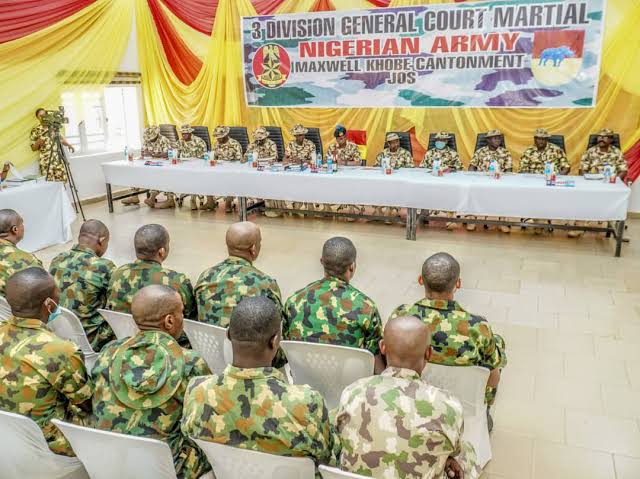
Prosecutors in the ongoing trial over the alleged 2025 coup plot against President Bola Tinubu have presented evidence claiming that the alleged mastermind, Nigerian Army Colonel Mohammed Ma'aji, transferred millions of naira to Islamic clerics while seeking spiritual backing for the planned overthrow of the government.
The claims are contained in investigation records filed before both a military General Court Martial and the Federal High Court in Abuja as part of the prosecution's case.
According to the documents, Colonel Ma'aji allegedly sought prayers, spiritual guidance and support from several Islamic clerics as investigators say he coordinated the failed coup plot. The clerics, however, told investigators they repeatedly discouraged him from pursuing any action against the government and instead urged him to abandon the plan.
The federal government is prosecuting six defendants over the alleged coup. They are retired Major General Mohammed Gana, retired Navy Captain Erasmus Ochegobia Victor, Police Inspector Ahmed Ibrahim, Presidential Villa electrician Zekeri Umoru, Bukar Goni and Kaduna-based Islamic cleric Abdulkadir Sani. They face a 13-count charge bordering on treason, terrorism, money laundering and failure to disclose information. All six have pleaded not guilty.
One of the clerics, Bukar Goni, told investigators he first met Colonel Ma'aji through another military officer who had approached him for prayers after repeatedly failing promotion examinations.
According to his statement, the colonel also complained about repeated failures in his promotion exams and believed senior officers were deliberately frustrating his career progression. Goni said he advised him to remain prayerful and recommended charitable offerings, commonly known as sadaka.
The cleric admitted receiving several payments from the colonel ranging from N300,000 to N1 million, insisting the money was for prayers and charitable activities.
He further alleged that Colonel Ma'aji later began discussing plans for what he described as a "riot" against the government. Goni said he immediately discouraged the idea and, with the help of another military officer, repeatedly persuaded the colonel to postpone the planned action.
According to the statement, he also used spiritual counselling to convince the officer that pursuing the alleged plot would end in disaster. The cleric claimed the warning temporarily persuaded the colonel to abandon the plan before discussions allegedly resumed months later.
Investigators also questioned Goni about larger financial transfers linked to the case.
He acknowledged receiving about N10 million within 15 days for prayers, followed by two separate transfers of N20 million each.
Goni maintained that he believed the money was intended to support the construction of a mosque after earlier discussions with the colonel. He told investigators that about N24.7 million had been used to purchase land for the project, while the remaining funds were reserved for further development.
He denied receiving money to support any political or unlawful activity.
Another defendant, Kaduna-based Islamic cleric Abdulkadir Sani, also told investigators that Colonel Ma'aji initially approached him only to request prayers during a religious event at the Emir's Palace in Bida.
Sani said he first became aware of the alleged coup plan after an intermediary later visited him with what he described as a message from the colonel. According to his statement, he warned that the operation would fail because members of the group would eventually betray the conspiracy.
Investigators alleged that shortly after the conversation, Colonel Ma'aji transferred N2 million into Sani's bank account for prayers.
Sani told investigators that his bank account was later flagged, prompting him to visit the Economic and Financial Crimes Commission (EFCC) to make inquiries. He said he was arrested during the visit.
The statements by both clerics form part of the prosecution's evidence in the ongoing trial. Prosecutors contend they illustrate the alleged efforts by the accused to secure spiritual support for the planned coup.
The defendants have challenged the admissibility of their statements and denied all allegations. The court is expected to determine the weight of the evidence as the trial continues.