
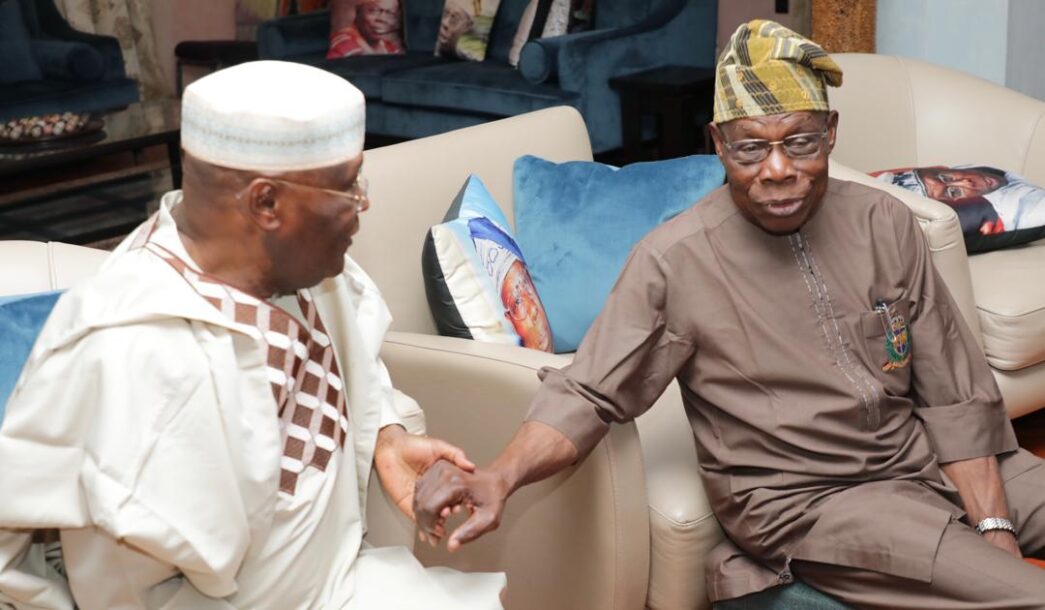
African Democratic Congress (ADC) presidential candidate, Atiku Abubakar, has accused former President Olusegun Obasanjo of being "unforgiving and vindictive" following fresh criticism from his former boss.
Obasanjo, who served as president from 1999 to 2007 with Atiku as his deputy, recently described picking Atiku as his running mate in 1999 as the "biggest mistake" of his political career.
Speaking at the launch of musician and activist Charly Boy's foundation and memoir in Abuja on Friday, Obasanjo said he would not have chosen Atiku if he had known him better at the time.
Reacting in a statement issued by his Senior Special Assistant on Public Communication, Phrank Shaibu, Atiku dismissed the remarks as an attempt to rewrite history, insisting they were driven by personal resentment rather than facts.
The former vice president said his relationship with Obasanjo deteriorated because he opposed what he described as the former president's bid for an unconstitutional third term in office.
"I am proud that I stood against the third-term agenda. I am proud that I stood by the Constitution of the Federal Republic of Nigeria," Atiku said.
He maintained that resisting the alleged third-term agenda was necessary to protect Nigeria's democracy, adding that he has no regrets over his position.
Atiku also recalled supporting Obasanjo during his imprisonment under the late Gen. Sani Abacha, claiming he stood by him throughout the period.
According to Atiku, he assisted Obasanjo's family, worked with others to secure his release, and helped him rebuild his life after he regained freedom.
He further claimed he provided clothing, care and political support that contributed to Obasanjo's emergence as president in 1999.
Despite the claims, Atiku said he does not regret helping his former boss, stressing that acts of kindness should not be done with the expectation of repayment.
The ADC presidential candidate also argued that his contributions to the Obasanjo administration and Nigeria's economic reforms have been acknowledged by many who served in government at the time.
He expressed disappointment that the former president was focusing on past political disagreements instead of addressing the country's current economic and security challenges.
Atiku said the 2027 general election should centre on rebuilding the economy, improving security and restoring hope, rather than revisiting old political disputes.
He added that although he had remained silent for years out of respect for Obasanjo and the office he once held, he would no longer allow what he described as repeated distortions of history to go unanswered.