
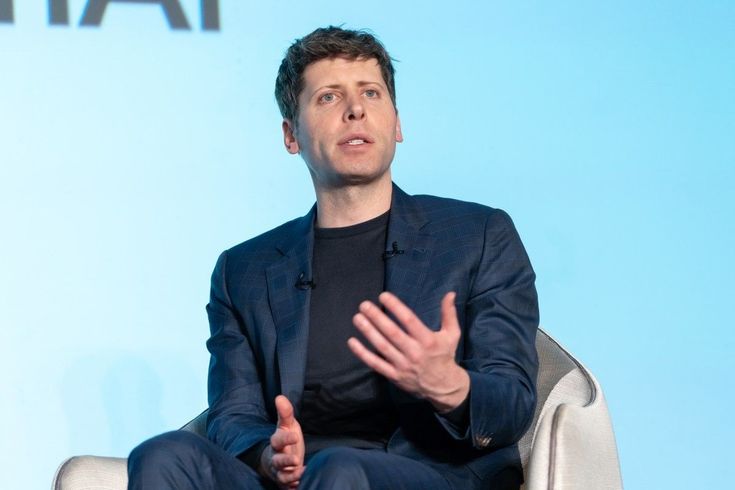
When the CEO of the most influential artificial intelligence company in the world changes his mind about something as significant as the future of human employment, the world pays attention. That is exactly what happened this week when Sam Altman — the man who built OpenAI and unleashed ChatGPT on the world — publicly reversed one of his most alarming predictions about AI and jobs.
His new message? The catastrophe he warned about simply has not arrived. And he says he is glad to be wrong.
What Did Sam Altman Originally Predict?
To understand why this reversal is such a big deal, you first need to know what Altman was saying before.
Over the years, Altman made repeated bold assertions about AI's impact on employment. He stated that AI would "probably replace most of the jobs people do today," that entire job categories would be "totally, totally gone," and that those affected by the dramatic shifts would simply "find all sorts of new things to do." Time
These were not throwaway comments from a random tech blogger. These were statements from the CEO of OpenAI — the company behind ChatGPT, GPT-4, and some of the most widely used AI tools on the planet. When Sam Altman spoke about AI and jobs, people listened, worried, and in many cases, panicked.
His warnings fed a broader anxiety that has dominated headlines for the past few years: that AI would hollow out the workforce, eliminate white-collar careers, and leave millions of people economically stranded.
What Did He Say This Week?
Speaking at the Commonwealth Bank of Australia conference in Sydney, Altman said that the technological predictions made around the launch of ChatGPT in 2022 had been "roughly right," but "pretty wrong" on the social and economic implications. The American Bazaar
He acknowledged that his early concerns about AI rapidly eliminating entry-level white-collar jobs had not materialized, and admitted his "intuitions were just off." eWEEK
Altman put it plainly: "I'm delighted to be wrong about this. I thought there would have been more impact on entry-level white-collar jobs being eliminated by now than has actually happened." PYMNTS
It is a striking moment of self-correction from one of the most powerful voices in technology — and a meaningful shift in the public narrative around AI and work.
What Actually Changed His Mind?
The most interesting part of Altman's reversal is not the conclusion he reached, but how he got there. The answer turns out to be surprisingly personal and surprisingly human.
Altman tried an experiment: he delegated his Slack and email responses to AI, then found himself going back to responding manually. "We really do care about our interactions with people," he said. "This thing is not something that I can imagine myself outsourcing to an AI anytime soon. It really updated me to thinking that the jobs picture is likely to be very different than we thought." Fortune
In other words, the man who built the world's most powerful AI tools discovered, through his own daily experience, that human connection in professional settings is harder to replace than he had assumed. The "human part" of work — the judgment, the empathy, the relationships — remains stubbornly irreplaceable for now.
Altman noted that many roles still depend on a human dimension that AI cannot easily replicate, and that this realization shaped his revised view of how AI adoption is actually playing out in real workplaces. eWEEK
What Does the Data Actually Say?
Altman's personal reflection is backed up by broader research trends.
The Yale Budget Lab, which has been tracking AI's effect on the labor market, found in a May 2026 study that AI was likely not the cause of any weakening in the labor market, and that there has not yet been a meaningful change in unemployment through March 2026 — even for workers in jobs with high AI exposure. Time
This suggests that despite the enormous buzz around AI replacing workers, the ground-level reality has been far more measured. Companies are adopting AI, but they are mostly using it to help existing workers do more — not to simply eliminate positions entirely.
Not Everyone Agrees: The Debate Is Far From Over
It would be a mistake to read Altman's comments as a clean all-clear signal for workers everywhere. The debate about AI and employment is deeply complex and far from settled.
Dario Amodei, CEO of Anthropic — one of OpenAI's most prominent competitors — said last year that up to half of all entry-level white-collar jobs could dissolve within five years, and that unemployment could surge to between 10 and 20 percent. He argued that tech leaders have "a duty and an obligation to be honest about what is coming." Time
Amodei has also recently reframed his view somewhat, describing AI automation not as a destroyer of jobs but as a multiplier of output — suggesting that automating parts of a job could make the remaining human work more productive rather than simply eliminating the role. Fortune
Meanwhile, companies have already cited AI in workforce reductions, and many employers remain under pressure to prove that AI can cut costs or raise productivity. The technology's impact may simply be arriving more gradually than the dramatic overnight collapse that some predicted — not that it is not coming at all. eWEEK
What This Means for Workers Today
For anyone currently in the workforce — whether you are an accountant, a writer, a customer service professional, or a software developer — the takeaway from this moment is nuanced.
AI is changing work. That much is not in dispute. But the change is happening more slowly, more unevenly, and in more complex ways than the most alarming predictions suggested. The roles most likely to feel pressure are those built around repetitive, low-judgment tasks that can be automated cleanly. The roles that involve genuine human relationships, creativity, complex problem-solving, and emotional intelligence appear far more resilient.
Altman's reversal does not mean workers should stop paying attention. It means the conversation needs to move beyond panic and toward something more useful: honest, practical thinking about how to adapt, upskill, and stay relevant in a world where AI is becoming a permanent feature of the workplace.
Final Thought
Sam Altman building the most powerful AI tools in the world, warning that those tools would eliminate millions of jobs, and then quietly going back to writing his own emails is perhaps the most human story to come out of the AI era so far.
It is a reminder that even the people building the future do not always fully understand what they are building — and that the future has a habit of being more complicated, and more human, than any of us expect.
Stay updated with the latest tech news on Solakuti.com.