
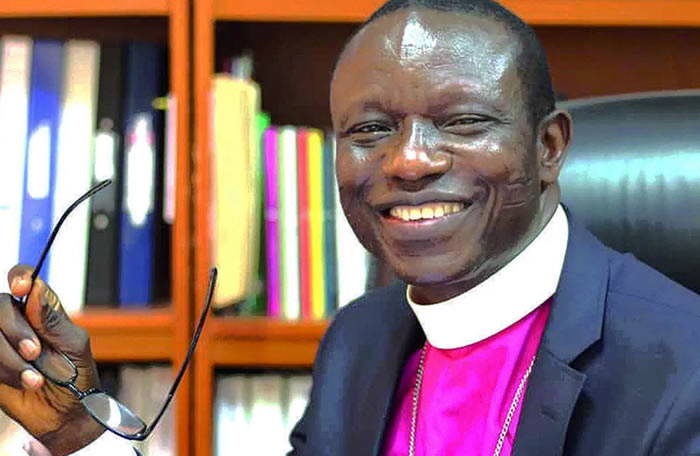
The Pentecostal Fellowship of Nigeria (PFN) has backed the Catholic Bishops Conference of Nigeria (CBCN) in its criticism of the state of the nation, with PFN President, Bishop Wale Oke, saying any attack on the Catholic bishops amounts to an attack on the entire Christian Church.
Oke made the statement while reacting to the controversy that followed the recent visit of the Catholic bishops to President Bola Tinubu, during which Catholic Archbishop Emeritus of Abuja, Cardinal John Onaiyekan, told the President that Nigeria was “bleeding.”
Speaking in an interview monitored by *Sunday Vanguard*, Oke endorsed the bishops’ concerns over insecurity and other challenges affecting Nigerians.
“Are we not bleeding? Are we not bleeding in Benue? Are we not bleeding in Southern Kaduna? Are we not bleeding in Gwoza, in Borno State? Are we not bleeding in Kwara? Are we not bleeding in Oyo State?” he asked, echoing Onaiyekan’s assessment of the situation in the country.
The PFN president said Christian leaders should be able to speak about the condition of the country without being accused of engaging in partisan politics.
“Should anybody attack a Catholic bishop for saying that? That is the obvious truth,” Oke said.
He stressed that denominational differences should not be used to divide Christians, arguing that the various Christian denominations remain part of one Church.
“The Church of Jesus Christ is one. There may be many denominations, but we have one faith, one Lord, one baptism. The Church is one. If they attack the Catholic bishops, they are attacking the whole Church,” he said.
Oke also criticised what he described as the government’s response to insecurity and killings in several parts of the country. He cited violence in Plateau, Southern Kaduna, Benue and Taraba, as well as attacks and criminal activities reported in other states.
He maintained that the government should pay greater attention to the security and welfare of Nigerians rather than attacking those who raise concerns about the situation.
The PFN leader also rejected the proposed amendment to the Federal Road Safety Commission Act that would impose a ₦50,000 fine for preaching in commercial vehicles.
Although the Senate has explained that the provision was contained in the law dating back to 2007 and was only re-itemised in the proposed amendment, Oke insisted that the restriction should be removed.
“We will break that law. Dear Senate of the Federal Republic of Nigeria, we will rather obey God than man,” he declared.
Oke said he had preached in buses since 1975 without causing accidents or distracting drivers.
“If you want to imprison us for preaching the gospel, we are ready. If you want to make all the stadiums in Nigeria prisons, we are ready. We would rather obey God than man,” he added.
He further called on the National Assembly to revisit Nigeria’s membership of the Organisation of Islamic Cooperation (OIC), arguing that the country joined the organisation under military rule without the consent of Nigerians.
“The Senate should deal with that and pull Nigeria out of the OIC,” Oke said.
He also called for a review of the 1999 Constitution, alleging that the document gives greater prominence to Islam than Christianity.
“In that Constitution, Islam is mentioned hundreds of times. Christianity is mentioned once. And Christians in Nigeria are a little over 50 per cent of the population,” he said.
Oke argued that the Constitution was imposed under military rule and should be replaced with a document that reflects the wishes and interests of Nigerians.
He also repeated allegations of genocide against Christians, accusing the government of spending resources to counter such claims abroad while killings continue in parts of Nigeria.
However, Pastor Seyi Osuntayo, Area Superintendent of The Apostolic Church Nigeria, Igbein Area, expressed reservations about the timing of the Catholic bishops’ intervention.
Osuntayo said the bishops’ comments could be interpreted as partisan, particularly as the country moves closer to the 2027 general elections.
“The timing of the Catholic Bishops Conference of Nigeria’s advice could be suspicious and be seen as partisan,” he said.
He argued that Christian leaders should focus on governance and prayer rather than becoming involved in political disputes.
Citing 1 Timothy 2:1–4, Osuntayo said Christians should continue to pray for political leaders irrespective of whether they agree with their policies or leadership style.
He also criticised the growing practice of religious leaders using media platforms to openly criticise government policies, saying such interventions could further heighten political tensions.
Journalist and author Ben Charles-Davies, however, rejected the criticism of the Catholic bishops and accused the government of diverting attention from the country’s economic difficulties.
Charles-Davies said poverty, insecurity, food inflation, high transportation costs and the decline of public services were the issues that should receive greater attention.
He recalled that the Catholic bishops had criticised the administration of former President Goodluck Jonathan in 2014 and were praised by the then opposition All Progressives Congress (APC) for speaking against the government.
According to him, the APC’s current reaction to similar criticism from the bishops amounts to hypocrisy.
“Today, the APC government is angry because the same bishops informed them that Nigerians are going through socio-economic hardship and they are unhappy. That’s hypocrisy,” he said.
Charles-Davies urged government officials to exercise restraint when responding to criticism from prominent Nigerians, arguing that the country belongs to all Nigerians and not only those in government.
He also questioned whether senior government officials were giving President Tinubu an accurate picture of the security and economic situation in the country.
Ugoji Maximillian, a speaker, author and entrepreneur who was raised Catholic and attended a seminary, offered a different assessment, describing the Catholic bishops as a politically influential institution.
Maximillian accused the bishops of using their influence and structures to exert pressure on politicians. He also linked the current disagreement to the bishops’ position during the 2023 presidential election.
He claimed that the bishops strongly supported Peter Obi during the election and were opposed to Tinubu, although their public criticism centred largely on the Muslim-Muslim presidential ticket.
According to him, the bishops’ current position should therefore be viewed partly within the context of political interests and influence.
A former Lagos State Commissioner for Physical Planning, Toyin Ayinde, urged Nigerians to take a more measured approach to assessing the government’s economic reforms.
Ayinde acknowledged the difficulties facing Nigerians but said there had also been improvements in some areas of the economy.
He cited his experience using a naira ATM card for international online payments and purchases while abroad.
“I have, in the course of this year, made an online payment of about £4,500 using my naira ATM card, and while in Canada, I used my naira ATM card for most of my purchases. I didn’t need to use the dollar card,” he said.
Ayinde cautioned that economic reforms take time to produce results and criticised what he described as Nigerians’ expectation that major changes should happen almost immediately.
“Nigerians don’t understand process, so everything must happen at microwave speed,” he said.
He also criticised the tendency to use public debate to shame opponents rather than offer constructive solutions to the country’s problems.