
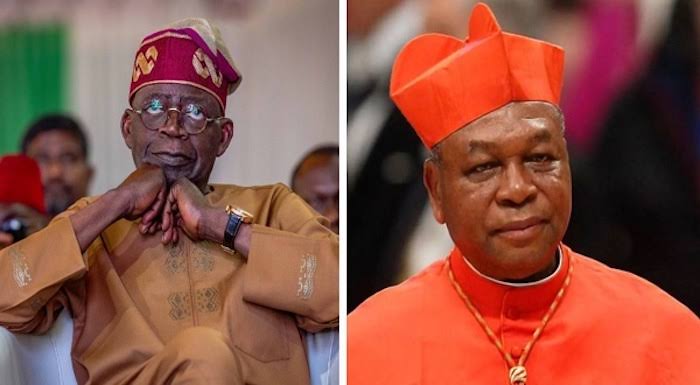
Archbishop Emeritus of Abuja, John Cardinal Onaiyekan, has said the Catholic Bishops’ Conference of Nigeria (CBCN) has no interest in engaging the Presidency in a public argument, urging the government to focus on improving the lives of Nigerians.
Onaiyekan spoke in an interview on *Frontline*, a current affairs programme on Eagle 102.5 FM, Ilese-Ijebu, Ogun State, following reactions from the Presidency after the bishops met with President Bola Tinubu at the State House, Abuja, on July 28.
The meeting was held to present the bishops’ concerns over Nigeria’s economic situation, insecurity and broader governance issues.
The Cardinal said the bishops had already communicated their position to the President and were now waiting to see whether their recommendations would influence government policies.
“We have spoken and the only response we are waiting for is whether it is affecting the way they are governing,” he said.
Onaiyekan declined to respond to criticisms from government supporters and spokespersons, saying he was more interested in the impact of the bishops’ message than public exchanges.
“That some of the supporters of government and the spokespersons may have their own ideas about what they think they should be saying on behalf of their principal is their business, not mine,” he said.
He added that reactions from Nigerians on social media showed that the concerns raised by the bishops had received public attention.
The former Abuja archbishop explained that the meeting with President Tinubu was requested by the CBCN after months of waiting for approval.
He said the visit was not aimed at promoting the Catholic Church’s interests but was part of the bishops’ responsibility to speak on issues affecting Nigerians.
“We didn’t go there as Catholic bishops pushing the Catholic agenda. We went there as people with the spiritual mandate to speak to anybody in the name of God,” he said.
According to him, the bishops wanted to share their views on governance and welfare, not to preach or attempt to influence the President’s religious beliefs.
“We didn’t go there to preach to him or try to convert him. We went there to share our views and thoughts about the government which he heads, hoping that our ideas will be taken into consideration,” he said.
Onaiyekan said the bishops hoped the engagement with the government would continue, noting that the brief meeting did not allow enough time to discuss all their concerns.
He called for further discussions where more detailed issues affecting Nigerians could be addressed.
“We are hoping that somehow, he will invite us, not necessarily to meet him, but at least to open up fairness for us to give more information and more concerns that we could not give in the few minutes we had,” he said.
The Cardinal also dismissed suggestions that the bishops had political ambitions, saying their intervention was based on their moral responsibility rather than partisan interests.
He said the document presented to the President was prepared and unanimously approved by the bishops.
“We don’t have any political ambitions. Our church does not even allow us to get engaged in party politics,” he said.
On Nigeria’s economy, Onaiyekan said government performance should not be measured only by economic statistics but by the living conditions of citizens.
“If we admit that the role of government is the welfare of citizens, then the important question is: how is the life of the Nigerian?” he asked.
He identified youth unemployment as one of the country’s biggest challenges, warning that many young Nigerians with university degrees were struggling to secure jobs and build stable futures.
“The terrible thing now is many of our young people who have struggled to finish university are going around with their degrees but are unable to get jobs,” he said.
According to him, the situation could create frustration among young people if urgent steps were not taken to address unemployment and governance challenges.
He urged government officials to demonstrate political will, fairness and accountability in running the affairs of the country.
Onaiyekan also called for greater involvement from religious leaders across Nigeria, including Christian and Muslim leaders, in engaging government on national issues.
He said a meeting involving major religious leaders and the President could provide an opportunity for broader dialogue on solutions to the country’s challenges.