
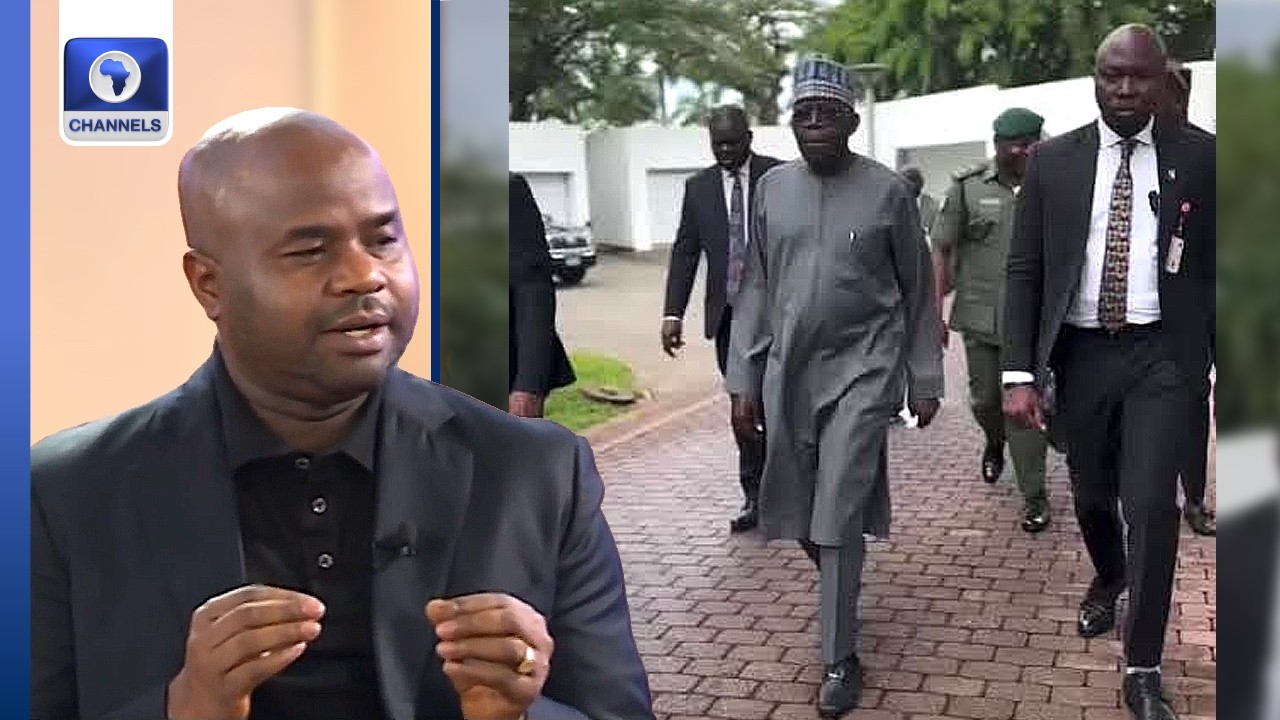
The Executive Chairman of the Nigeria Revenue Service, Zac Adedeji, has defended President Bola Tinubu against claims that he lives an extravagant lifestyle, saying the President walks from his residence to his office and eats only once a day.
Adedeji made the remarks during an interview with Channels Television on Sunday, August 9, 2026, while responding to questions from journalist Seun Okinbaloye about the lifestyle of political office holders amid the economic difficulties facing Nigerians.
The discussion comes as concerns over government spending and the lifestyles of public officials continue to generate debate, particularly amid rising living costs and economic pressure on households.
Addressing questions about the President’s convoy and reported use of luxury vehicles, Adedeji said Tinubu does not regularly use vehicles to move between his residence and office.
“Mr President goes from home to office on foot, not even driving except when he is going to the airport. I don’t know where you see the convoy. Before he became president, what is he riding?” Adedeji said.
He also questioned criticism of the President’s reported use of luxury vehicles, including Cadillac Escalades.
“How much is an Escalade that the president of Nigeria cannot afford? Please don’t embarrass this country,” he said.
Adedeji further claimed that Tinubu had not travelled outside Nigeria in the past three months, describing the President as focused on official duties.
“What is living large? In the last months, he has not even left the shores of this country, trekking and working. If you go there now, you will see him review one document or the other,” he said.
The NRS chairman also claimed that the President eats only once a day and rarely attends social events.
“So what is living large? The president eats once in a day. How many parties have you seen him at in the last three years? Tell me where you have seen him, whether on holiday or anywhere?” he added.
His comments come amid continued scrutiny of the spending and personal lifestyles of Nigeria’s political leaders, with citizens and civil society groups increasingly demanding greater accountability over the use of public resources.