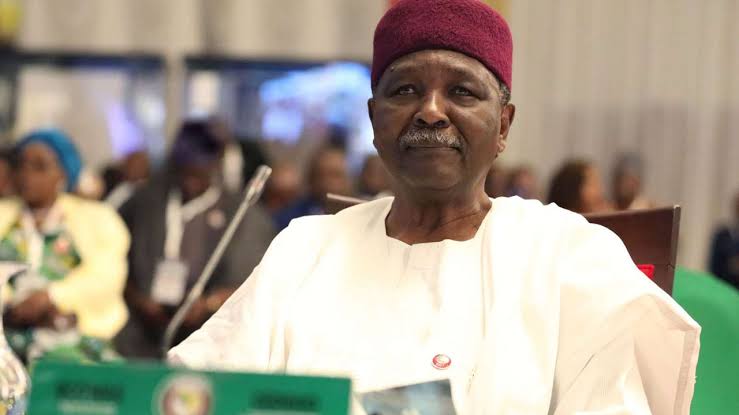
Former Head of State Yakubu Gowon has disclosed that restrictions imposed by the United States and the United Kingdom on arms sales to Nigeria during the civil war pushed his government to seek military supplies from the Soviet Union and private intermediaries.
He made the revelation in his newly published autobiography, *My Life of Duty and Allegiance*, launched in Abuja on Tuesday, May 19.
The book revisits Nigeria’s experience during the Nigerian Civil War, where Gowon described a severe shortage of ammunition that, according to him, significantly constrained military operations.
He wrote that by late 1968, Nigeria’s ammunition reserves had fallen to critically low levels.
“As the weeks of fighting wore on, our stock of ammunition was steadily depleted… and we could not replenish them because international sales restrictions prevented suppliers from selling military hardware to Nigeria,” Gowon stated.
He said the situation forced him to halt further advances after the capture of Enugu, ordering troops to consolidate positions rather than continue offensives.
Gowon also recounted his interactions with Western diplomats at the time, expressing frustration over what he described as limited support from traditional allies.
“If I say I’m not disappointed, it will be an understatement… I have a duty and responsibility to keep Nigeria united and safe for all Nigerians,” he wrote.
It was in this context that Gowon said he made a decisive statement to foreign representatives about exploring alternative sources of support.
“I will go to any devil to get what I need to deal with the problem, to do my duty to my country,” he recalled saying.
Following the diplomatic stalemate, he said Nigeria established direct contact with the Soviet Union through its envoy in Nigeria. A delegation including Anthony Enahoro, Edwin Ogbu, Air Chief Emmanuel George Kurubo, and Ambassador John Ukegbu was subsequently sent to Moscow.
Gowon noted that the Soviet Union supplied military aircraft, including MiG trainer and combat jets, marking a shift in Nigeria’s external military partnerships during the conflict.
However, he said Soviet assistance did not fully resolve the immediate shortage of ammunition. He disclosed that a Lebanese businessman, Ali Jamal, later helped finance urgent weapons procurement on a deferred reimbursement arrangement.
“He told me not to worry and that he would use his own money to provide the ammunition we needed,” Gowon wrote.
The arrangement later sparked internal disagreement within the Federal Executive Council, with then Finance Commissioner Obafemi Awolowo reportedly questioning the lack of formal approval procedures.
Gowon said he eventually overruled the objection, citing the urgency of the war situation.
“I’m afraid I’ll want to use my powers and authority… to give any department the order to do what is required to be done,” he said.
He added that all funds advanced through the arrangement were eventually repaid by the Nigerian government.
The memoir, spanning 36 chapters, covers Gowon’s early life in Plateau State, his leadership during the civil war, his removal from office in 1975, and his later years in public service and academic work.