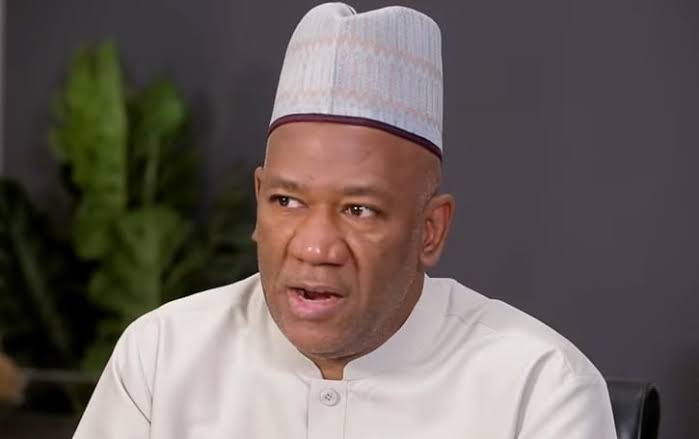
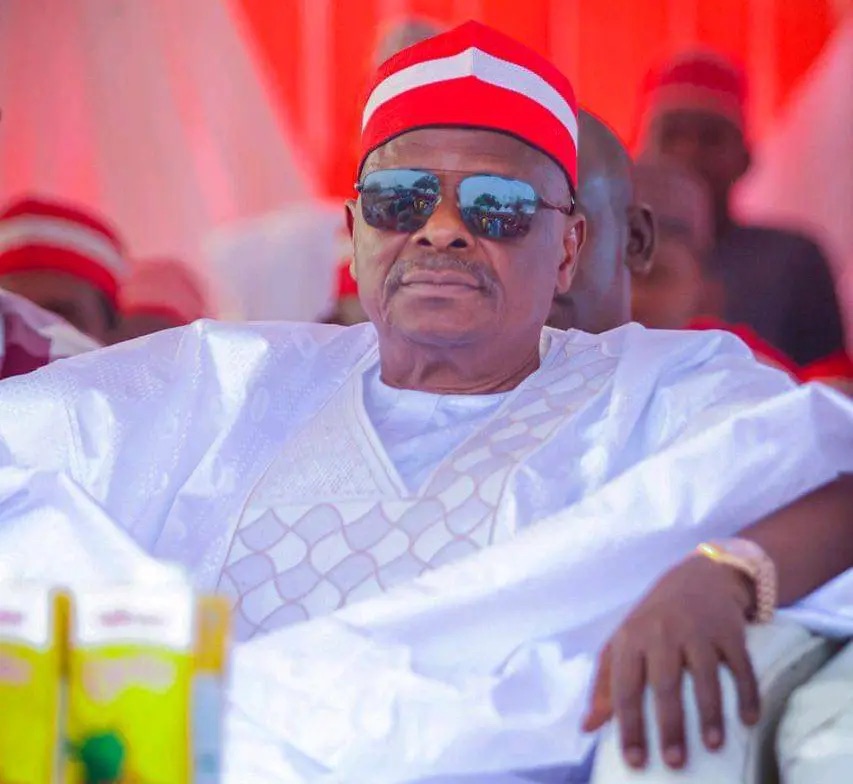
Former Kano State governor and Nigeria Democratic Congress (NDC) vice-presidential candidate, Rabiu Musa Kwankwaso, has called for stronger political cooperation between the North and the South-East, saying the two regions should move beyond the divisions caused by the civil war.
Kwankwaso made the remarks in an interview with BBC Igbo published on Wednesday, where he described the South-East as a longtime ally of the North and urged Nigerians to embrace reconciliation and inclusion ahead of the 2027 general elections.
He said historical relationships between northern and South-East leaders showed that political cooperation was possible despite past conflicts.
“We have to forgive ourselves. We have to work together as a family. South-East has been our ally, our friends, over the years,” Kwankwaso said.
The former defence minister cited the First Republic as an example of cross-regional cooperation, recalling the alliance between the Northern People’s Congress (NPC) and the National Council of Nigerian Citizens (NCNC), led by Nigeria’s first President, Nnamdi Azikiwe.
According to him, the partnership demonstrated that early political leaders prioritised national interests over ethnic divisions.
“During the First Republic, you could see the NPC, which was mainly a northern political party, had an alliance with the NCNC, headed by Nnamdi Azikiwe,” he said.
Kwankwaso also referred to Nigeria’s return to civilian rule in 1979, saying political leaders at the time made efforts to rebuild trust with the South-East after the civil war.
He said the National Party of Nigeria (NPN), which had strong northern support, worked with South-East politicians and supported the emergence of Alex Ekwueme as Nigeria’s vice-president under President Shehu Shagari.
“The civil war was finished in 1970. In 1978 and 1979, when democracy came back, the first thing they said was, ‘They are not our enemies. Let’s prove it to them. Let’s bring them. Let’s work together,’” he said.
Kwankwaso described Ekwueme as a respected figure who maintained strong ties with the North, recalling that he attended the late statesman’s burial in Oko, Anambra State.
“I went to Oko, his hometown. I was there during Alex Ekwueme’s burial. Throughout his life, he was our friend,” he said.
He also mentioned the return of former Biafran leader Chukwuemeka Odumegwu Ojukwu from exile as another example of post-war reconciliation.
Kwankwaso said northern political leaders supported Ojukwu’s return and his participation in democratic politics despite his role during the civil war.
“The NPN, a mainly northern party, had to invite Ojukwu to come back. He came back, contested for a Senate seat, and lost,” he said.
“But despite the fact that he was the leader of Biafra at that particular time, our leaders decided to forgive themselves and forge ahead.”
Kwankwaso warned against political strategies based on religion, ethnicity or regional divisions, arguing that no part of the country could successfully govern Nigeria alone.
“We cannot be in the same country and start fighting. We have to have the spirit of forgiveness, whoever offended the other. It depends on who is giving the story,” he said.
He added that renewed cooperation between the North and South-East should not be interpreted as hostility towards other regions.
“We are so happy that we in the North have decided to go back to history to work with the South-East. That's not to say we are fighting the South-West or any zone in this country. No, we are all friends,” he said.
Kwankwaso maintained that national politics must be built around broader cooperation rather than religious or regional identities.