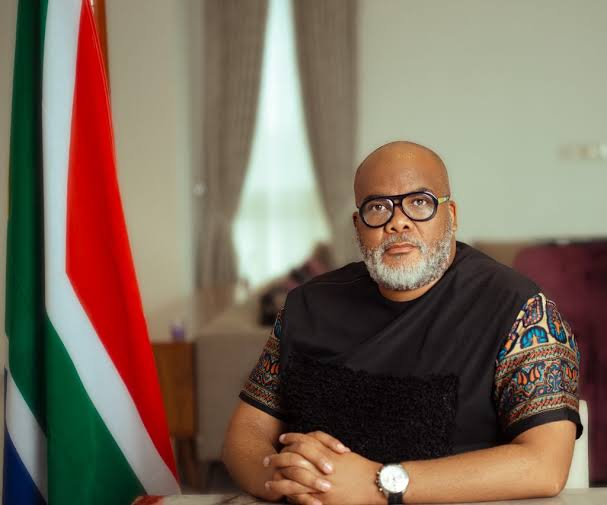
The South African Consul-General to Nigeria, Prof. Bobby Moroe, has urged Nigerians to continue visiting South Africa, assuring them that the country is safe for tourists, business travellers and other visitors.
Moroe, who spoke during an interview with Nigerian Info FM, also dismissed reports that South African diplomatic missions in Nigeria had stopped issuing visas to Nigerians.
“I just want to give reassurance that South Africa is open for business, South Africa is open for tourism and South Africa is open for any other form of visit,” he said.
The diplomat said Nigerians planning to travel to South Africa should obtain valid visas, comply with the country’s immigration laws and understand their rights and responsibilities while there.
“It is everybody’s responsibility to ensure that before you travel, you ensure that you have your visa, you comply with the immigration laws of the country, you become a good ambassador of your country,” Moroe said.
“When you get to South Africa, you know and understand your rights, but you must also familiarize yourself with the laws of the country.”
Moroe also said the South African government would protect everyone within the country, regardless of their immigration status, including undocumented migrants.
### Moroe rejects ‘xenophobia’ description
The Consul-General rejected the description of violent attacks against foreigners in South Africa as xenophobia when questioned about previous incidents involving Nigerians and other foreign nationals.
“There’s no xenophobia in South Africa,” Moroe said.
When reminded that Nigerians had been victims of attacks previously described as xenophobic, he maintained his position.
“You know, I will not call it a name now, but it is not xenophobia,” he said.
Moroe attributed some of the tensions involving foreigners to socioeconomic challenges in South Africa, including unemployment, inequality and poverty. However, he stressed that violence was not an acceptable response.
“South Africans are raising genuine issues of unemployment, inequality, and poverty, but for them to raise them in a violent manner, it’s something that government rejects,” he said.
He also criticised the repeated use of the word “xenophobia” in reports about attacks involving foreigners in South Africa.
“The nomenclature xenophobia has become synonymous with South Africa,” he said.
“If it happens in other countries, like it’s happening in Ghana now, it is not given the name xenophobia. It’s called something else, whether misunderstanding, diplomatic downfall or something like that. It is not called xenophobia.”
According to Moroe, the repeated characterisation of such incidents as xenophobia has contributed to negative perceptions of South Africa and affected relations between South Africans and citizens of other African countries.
“So this is a nomenclature created probably by media in order to sow divisions between the two countries,” he said.
“And the unfortunate part is that we have fallen into that trap and we follow that narrative rather than correcting it and working together in order to demystify the stigma attached to the notion that South Africans are xenophobic.”
‘South Africa hosts highest number of migrants in Africa’
Moroe argued that South Africa’s large migrant population showed that the country remained open to foreigners.
“South Africans are not xenophobic. Otherwise you would not be having the number of migrants that are there in South Africa,” he said.
“Now, South Africa is host to the highest number of migrants in Africa, both legal and illegal.”
He said the government had also continued to provide mechanisms for migrants to regularise their stay, including extensions of visas and permits.
“Our government has always been tolerant and giving provisions for extension of visas, extension of permits to this, but nobody talks about that,” Moroe said.
Consul-General dismisses visa claims
Moroe further denied claims that South African missions in Nigeria had stopped issuing visas to Nigerians.
“It is also untrue to suggest that South African missions in Nigeria do not offer visas to Nigerians anymore. And I want to give assurance to Nigerians that it is safe to travel to South Africa,” he said.
He advised Nigerians planning to visit the country not to allow reports on social media to discourage them from travelling, while urging visitors to exercise normal caution and familiarise themselves with law enforcement facilities around the areas they visit.
“I can assure you and the listeners that it is safe to travel to South Africa,” Moroe said.
“We are quite comfortable and we have no doubt that a lot of Nigerians who still want to visit South Africa for whatever reason can still go there.”